How to serve rolled oats at 6 and 9 months
Ages are approximate; go by your baby’s skills.
Ages are approximate; go by your baby’s skills.
6+ months
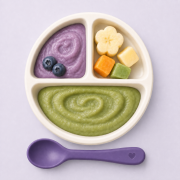
Cook rolled oats in water or with some pasteurized milk added until completely soft. Blend the cooked oatmeal if needed. Serve on its own, with mashed fruit, or with vegetable puree; keep the oatmeal soft and moist.
Offer soft oatmeal on a pre-loaded spoon, or make soft pancakes from ground oats. Cut the pancakes into long strips that stick out of the fist, with no hard crust.
9+ months
If your baby manages soft pieces, you can offer small soft pieces of oat pancakes. Keep offering well-cooked oatmeal without necessarily blending it.
Once your baby has a pincer grasp, offer small soft pieces of oat pancakes. Your baby can keep eating oatmeal on their own with a spoon.
Choking risk
Dry or undercooked oats can be hard to swallow. For babies, cook oats thoroughly until soft and smooth.
Keep your child sitting upright and stay with them throughout the meal.
Allergies
Individual allergic reactions are possible.
Does oatmeal have gluten?
Oats don’t contain gluten on their own, but they’re often grown and processed alongside wheat, barley, and rye and pick up gluten that way. That’s why the NHS advises people with celiac disease to choose only oats labeled gluten-free. Oats have their own protein, avenin; most people with celiac disease tolerate it, but a few don’t. If celiac disease runs in your family, talk with your pediatrician before introducing oats.
Iron
100 g of plain dry oats has 4.3 mg of iron. Babies 7 to 12 months old need about 11 mg a day.
That’s from USDA and NIH data. Oats are a meaningful iron source on their own, and iron-fortified baby oatmeal has even more. Compare labels: the NIH lists fortified cereals among good iron sources.
What to cook it in
For a younger baby, you can cook oatmeal in water, breast milk, or formula. The NHS says cow’s milk can be used in cooking from around 6 months, though not as a main drink until age 1. So oatmeal made with cow’s milk works from the start of solids.
Oat drinks don’t replace milk
Oat, rice, or almond drinks aren’t a substitute for breast milk or formula before the first birthday. The NHS says unsweetened, calcium-fortified drinks such as soy, oat, or almond can be given from age 1 as part of a balanced diet.
Fortified cereal and zinc
The CDC lists zinc-fortified infant cereals as one source of this mineral. Children 7 to 24 months old need 3 mg of zinc a day for growth, immune function, wound healing, and the senses of smell and taste. Zinc matters most for breastfed babies: breast milk is rich in zinc after birth, but levels go down over the first 6 months. Check the label on your baby’s oatmeal.
Sources · 15
This page is based on guidance from health organizations:
- CDC — When, What, and How to Introduce Solid Foods
- NHS — From around 6 months
- USDA FoodData Central — Cereals, oats, regular and quick, not fortified, dry
- NHS — Coeliac disease: causes
- NHS inform — Gluten-free diet
- NIDDK — Eating, Diet, & Nutrition for Constipation in Children
- NHS — Foods to avoid giving babies and young children
- AAP — When Can Babies Start Solid Foods?
- NHS — Food allergies in babies and young children
- NHS — Coeliac disease: treatment
- NIH ODS — Iron
- NHS — Your baby's first solid foods
- NHS — What to feed young children
- NHS — Drinks and cups for babies and young children
- CDC — Zinc
For informational purposes only. Not medical advice. Decide on introducing foods, especially allergens, together with your pediatrician.