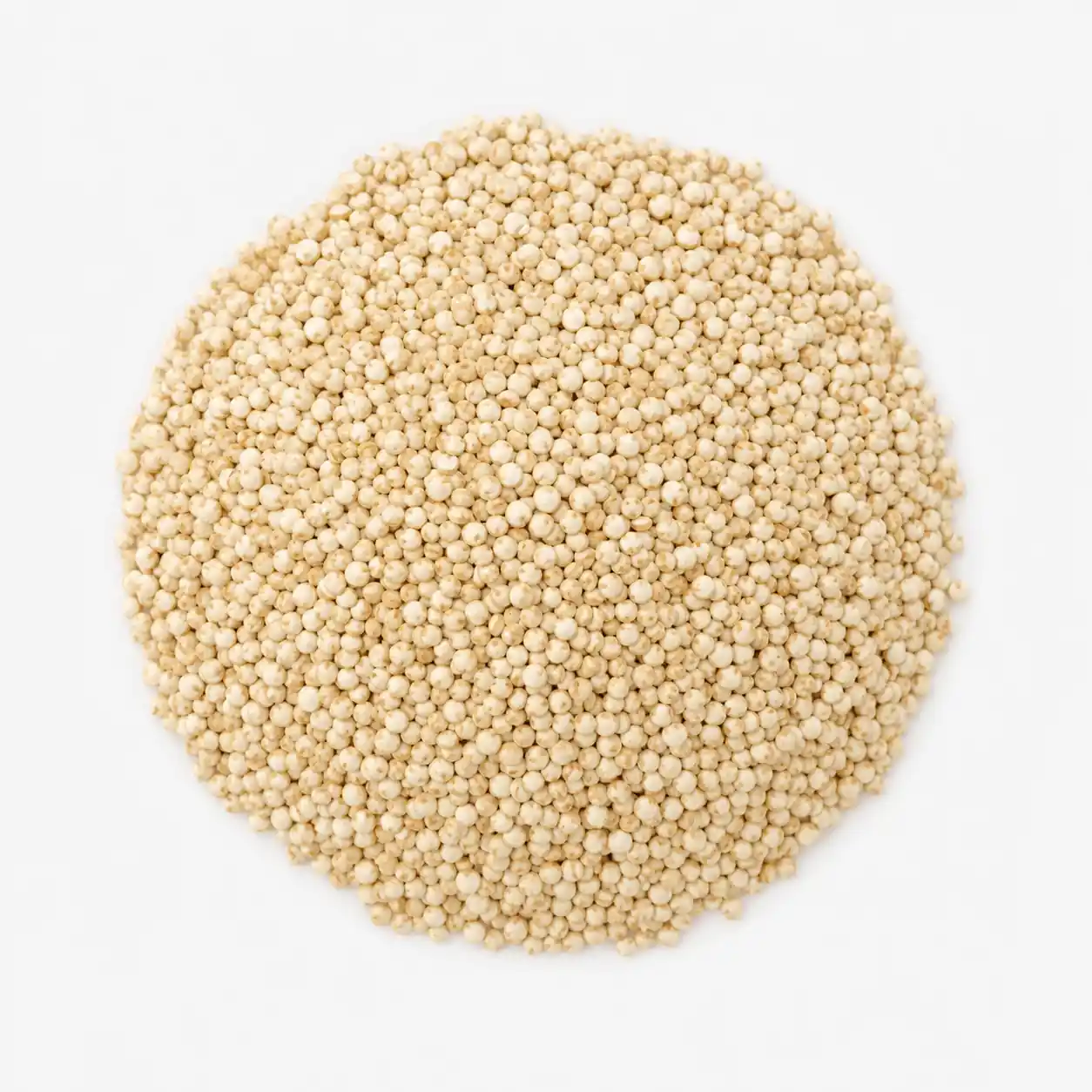
How to serve by age
6+ months
Cook quinoa until very soft and serve it as a smooth, moist cereal or soft puree.
Offer soft, moist quinoa cereal on a pre-loaded spoon.
9+ months
Offer a thicker soft cereal of well-cooked quinoa that holds on a spoon but still mashes easily.
Offer thicker soft quinoa your baby can practice scooping as their skills develop.
12+ months
Offer soft, moist quinoa as a grain base in family meals, never dry and loose.
Offer soft, moist quinoa for your child to eat with a spoon on their own or as part of a soft grain dish.
Choking risk
Dry, loose, or undercooked quinoa can be hard for babies to swallow. Cook it until soft and moist; for younger babies, mash it more or make it smoother.
Keep your child sitting upright and stay with them throughout the meal.
Allergies
Individual allergic reactions are possible.
More than rice
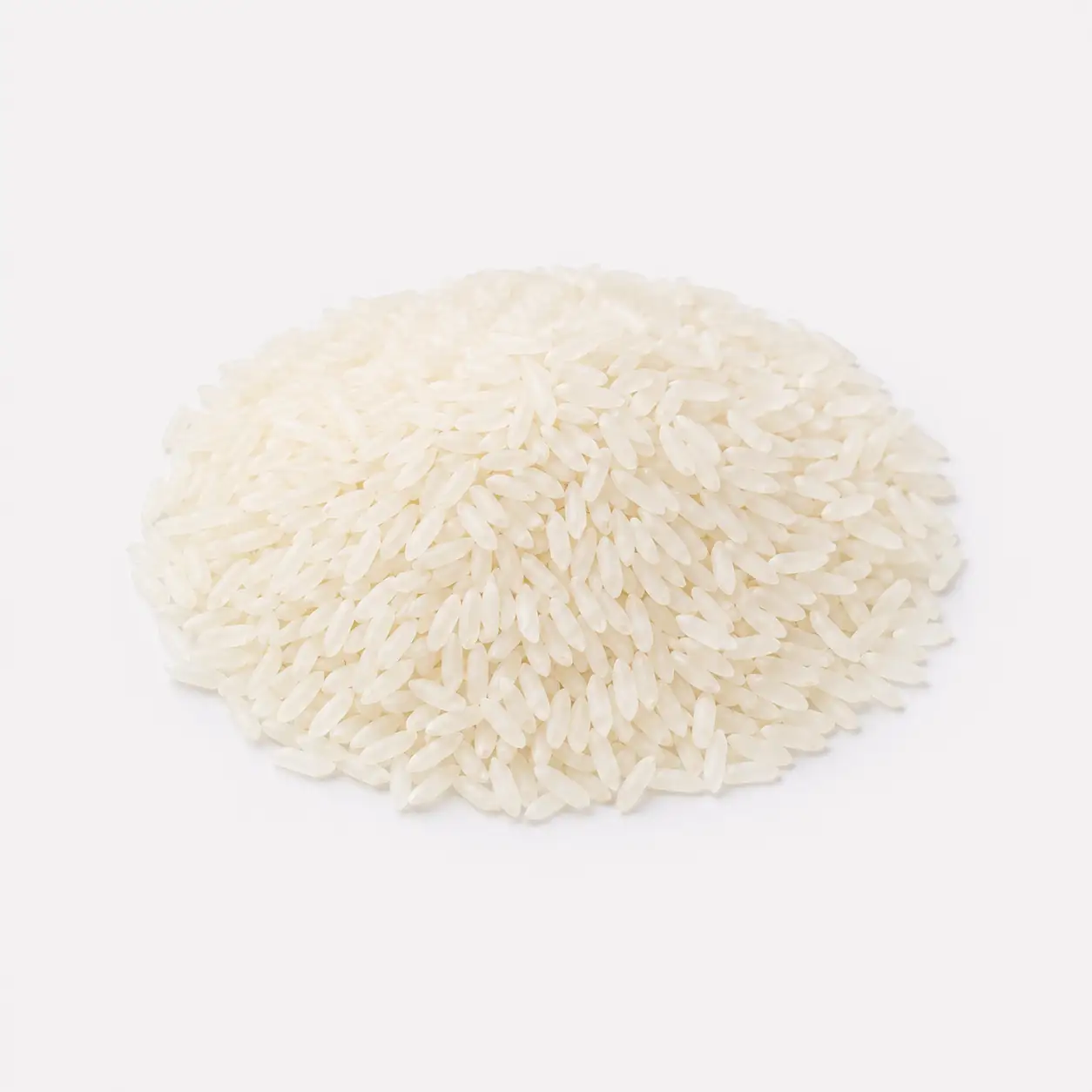
100 g of cooked quinoa has 64 mg of magnesium, five times as much as white rice.
That’s USDA data: cooked white rice has 12 mg of magnesium. Babies 7 to 12 months old need 75 mg of magnesium a day (NIH data), so a serving of quinoa covers a good share.
Cooked quinoa has slightly fewer calories than rice: 120 per 100 g versus 130.
Protein, fiber, and zinc
100 g of cooked quinoa has 4.4 g of protein, 2.8 g of fiber, and 1.1 mg of zinc. White rice has 2.7 g of protein, 0.4 g of fiber, and 0.5 mg of zinc. The zinc in a serving of quinoa is more than a third of the daily need for children 7 to 24 months old (3 mg, according to the CDC).
Folate, manganese, and iron
The same portion has 42 mcg of folate, about half the daily amount for babies 7 to 12 months old (80 mcg, according to the NIH), 0.63 mg of manganese, just over the daily amount (0.6 mg), and 1.5 mg of iron. Quinoa also has 172 mg of potassium and 0.12 mg of vitamin B6, about a fifth and about 40% of the daily amounts for babies 7 to 12 months old (860 mg and 0.3 mg, according to the NIH).
Sources · 16
This page is based on guidance from health organizations:
- WHO — Complementary feeding
- CDC — When, What, and How to Introduce Solid Foods
- NHS — Your baby's first solid foods
- CDC — Infant and Toddler Nutrition
- CDC — Fingers, Spoons, Forks, and Cups
- CDC — Choking Hazards
- NHS — Food allergies in babies and young children
- USDA FoodData Central — Quinoa, cooked
- USDA FoodData Central — Rice, white, long-grain, enriched, cooked
- NIH ODS — Magnesium
- CDC — Zinc
- NIH ODS — Folate
- NIH ODS — Manganese
- NIH ODS — Iron
- NIH ODS — Potassium
- NIH ODS — Vitamin B6
For informational purposes only. Not medical advice. Decide on introducing foods, especially allergens, together with your pediatrician.