How to serve by age
6+ months
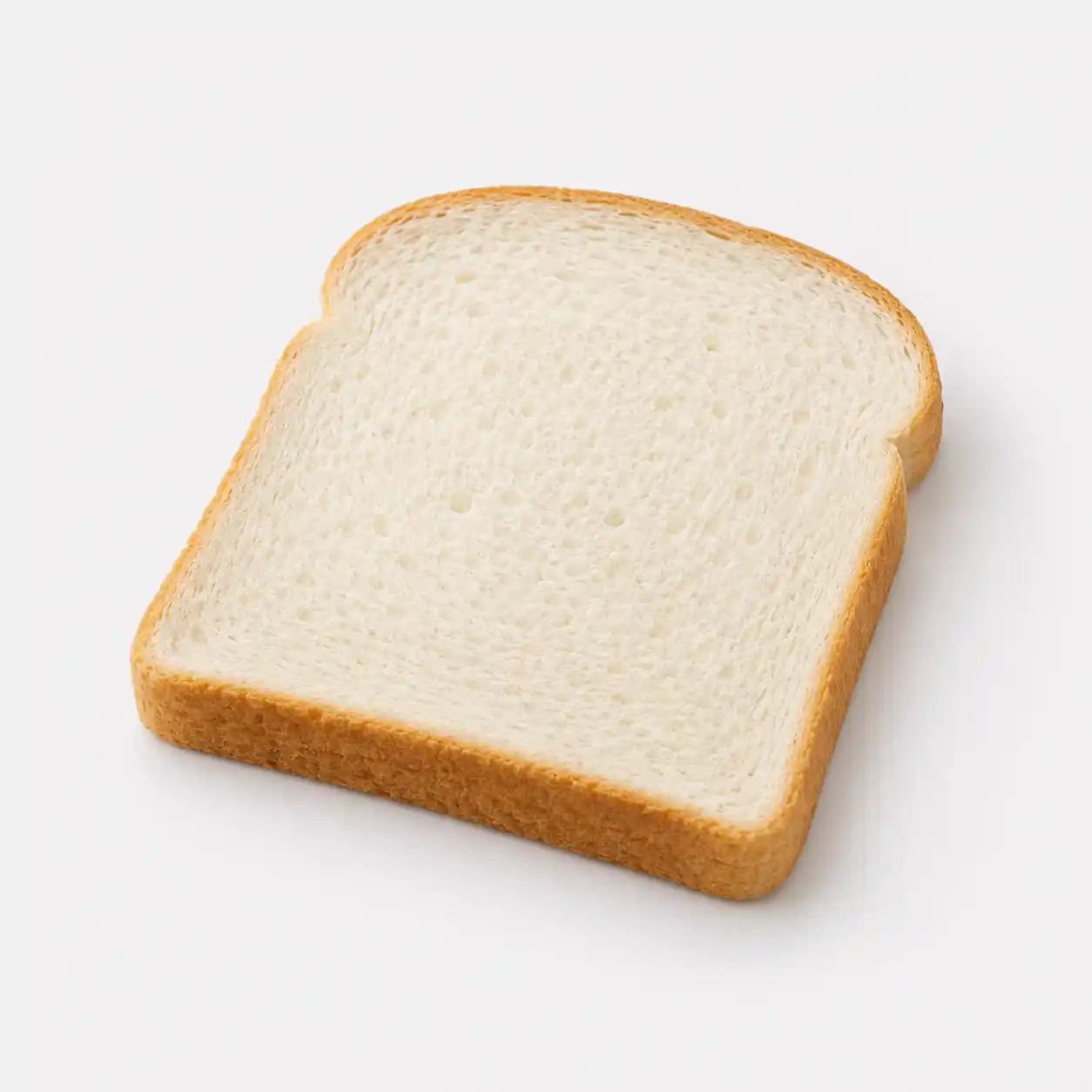
Offer bread in strips your baby can hold in their fist, with part sticking out. Lightly toast white bread so it doesn’t squash into a sticky lump; don’t toast it until hard and crunchy.
9+ months
Once your baby can pick up small pieces with their fingers, offer bread in small pieces. Lightly toast white bread; avoid hard crusts and sticky bread.
12+ months
Offer strips or small pieces of bread suited to your child’s eating skills. Continue to avoid hard crusts and bread that squashes into a sticky lump.
Choking risk
Soft, doughy bread can squash into a sticky lump in the mouth, and hard crusts or rusks are difficult to chew. Lightly toast white bread so it doesn’t clump, and cut off hard crusts. Offer bread in strips or small pieces that suit your child’s eating skills, not large chunks.
Keep your child sitting upright and stay with them throughout the meal.
Allergies
Wheat bread contains wheat, one of the major food allergens.
Salt in bread
100 g of white bread has 490 mg of sodium.
That’s USDA data; whole-wheat bread has 455 mg. Bread is an everyday food, so its salt adds up without you noticing. The NHS advises against much salt for babies, since it isn’t good for their kidneys. Compare labels, pick lower-salt bread, and keep your baby’s portions small.
Whole-wheat bread
The NHS suggests choosing whole-grain starchy foods where you can and calls whole-grain bread a good source of fiber, which helps food move through the gut. According to USDA data, 100 g of whole-wheat bread has 6 g of fiber, while white bread has 2.7 g. Whole-wheat bread has three times the magnesium, 75 mg versus 23 mg, and more than twice the zinc, 1.8 mg versus 0.7 mg.
Toast it light
The FDA notes that toasting bread forms acrylamide, a substance that develops in plant foods at high temperatures. Toasting bread to a light brown rather than a dark brown color lowers the amount.
Bread and energy
The NHS counts bread among starchy foods, which provide energy along with fiber, calcium, iron, and B vitamins. 100 g of white bread has 266 calories and 9 g of protein, and whole-wheat has 252 calories and 12 g of protein, according to USDA data.
According to USDA data, 100 g of white bread has 3.6 mg of iron and 144 mg of calcium, and whole-wheat bread has 2.5 mg of iron and 161 mg of calcium.
Sources · 12
This page is based on guidance from health organizations:
- WHO — Complementary feeding
- CDC — When, What, and How to Introduce Solid Foods
- NHS — Foods to avoid giving babies and young children
- CDC — Infant and Toddler Nutrition
- NHS — Your baby's first solid foods
- AAP — Starting Solid Foods
- AAAAI — Food Allergy
- NHS — Food allergies in babies and young children
- USDA FoodData Central — Bread, white, commercially prepared
- USDA FoodData Central — Bread, whole-wheat, commercially prepared
- NHS — Starchy foods and carbohydrates
- FDA — Acrylamide and Diet, Food Storage, and Food Preparation
For informational purposes only. Not medical advice. Decide on introducing foods, especially allergens, together with your pediatrician.