How to serve plum at 6 and 9 months
Ages are approximate; go by your baby’s skills.
Ages are approximate; go by your baby’s skills.
6+ months
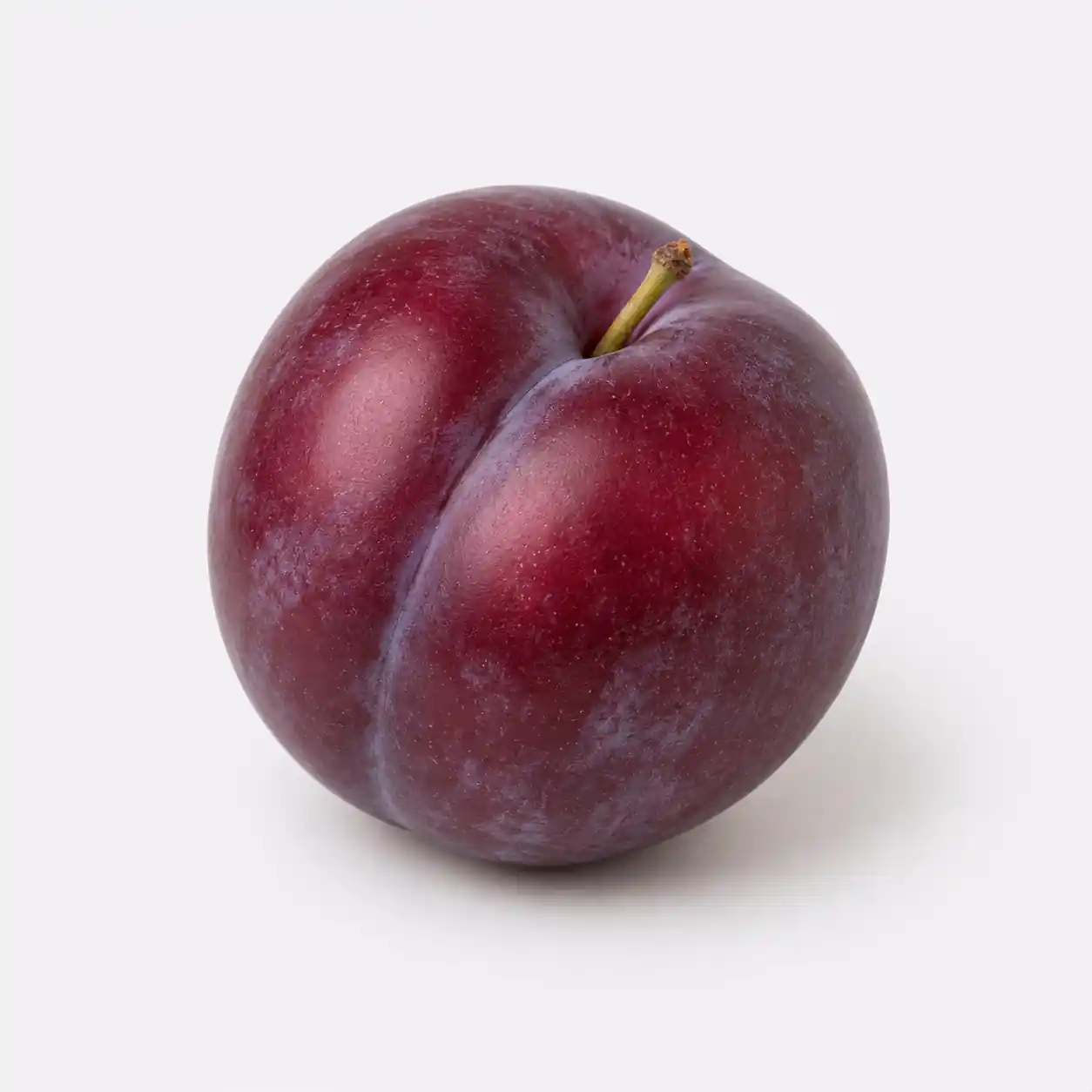
Wash the plum, remove the pit, and check that no fragments are left. Mash the ripe, soft flesh; remove tough skin. Steam or stew firm plums until soft first. Serve on their own or with cereal or yogurt.
Remove the pit and any fragments. Offer ripe, soft plum in large wedges that are easy to hold in the palm; remove tough skin. Cook firm plums until soft first. If the wedges are small or fall apart, offer mashed plum on a pre-loaded spoon.
9+ months
If your baby manages soft pieces, offer small soft pieces of plum without the pit or tough skin.
Once your baby has a pincer grasp, offer small soft pieces of plum without the pit or tough skin.
Choking risk
Unripe plum or large pieces of skin can be hard for young children to chew safely.
To lower the risk:
- offer soft, ripe plums;
- remove the pit;
- peel if needed;
- cut into thin soft slices or small pieces.
Keep your child sitting upright and stay with them throughout the meal.
Allergies
People with a birch pollen allergy may cross-react to plum.
Individual allergic reactions are possible.
Plums and prunes
100 g of prunes has 38.1 g of sugars, almost 4 times as much as fresh plums.
That’s USDA data: 100 g of fresh plum has 9.9 g of sugars and 87 g of water, while prunes keep only 31 g of water. Drying removes the water, so everything else is packed into less weight. A handful of prunes isn’t the same as a handful of fresh plums.
Fiber
The same goes for fiber: 1.4 g per 100 g of fresh plum versus 7.1 g in prunes, according to USDA data. Fresh plums are a soft, juicy everyday fruit, while prunes are more often used when poop needs a little help.
Vitamin C
100 g of fresh plum has 9.5 mg of vitamin C, about a fifth of the daily amount for babies 7 to 12 months old (50 mg, according to the NIH). Prunes have almost none: 0.6 mg per 100 g, according to USDA data. Vitamin C breaks down during drying, so fresh plums are the ones to reach for.
Vitamin K
100 g of fresh plum has 6.4 mcg of vitamin K, according to USDA data. That’s more than twice the daily amount for babies 7 to 12 months old, which the NIH puts at 2.5 mcg. Vitamin K helps blood clot and keeps bones healthy.
Sources · 10
This page is based on guidance from health organizations:
- CDC — When, What, and How to Introduce Solid Foods
- NHS — From around 6 months
- USDA FoodData Central — Plums, raw
- NHS Scotland — Dietary advice for families: constipation
- NHS — Preparing food safely for babies
- NHS — Choking and gagging on food
- AAAAI — Oral Allergy Syndrome
- USDA FoodData Central — Plums, dried (prunes), uncooked
- NIH ODS — Vitamin C
- NIH ODS — Vitamin K
For informational purposes only. Not medical advice. Decide on introducing foods, especially allergens, together with your pediatrician.