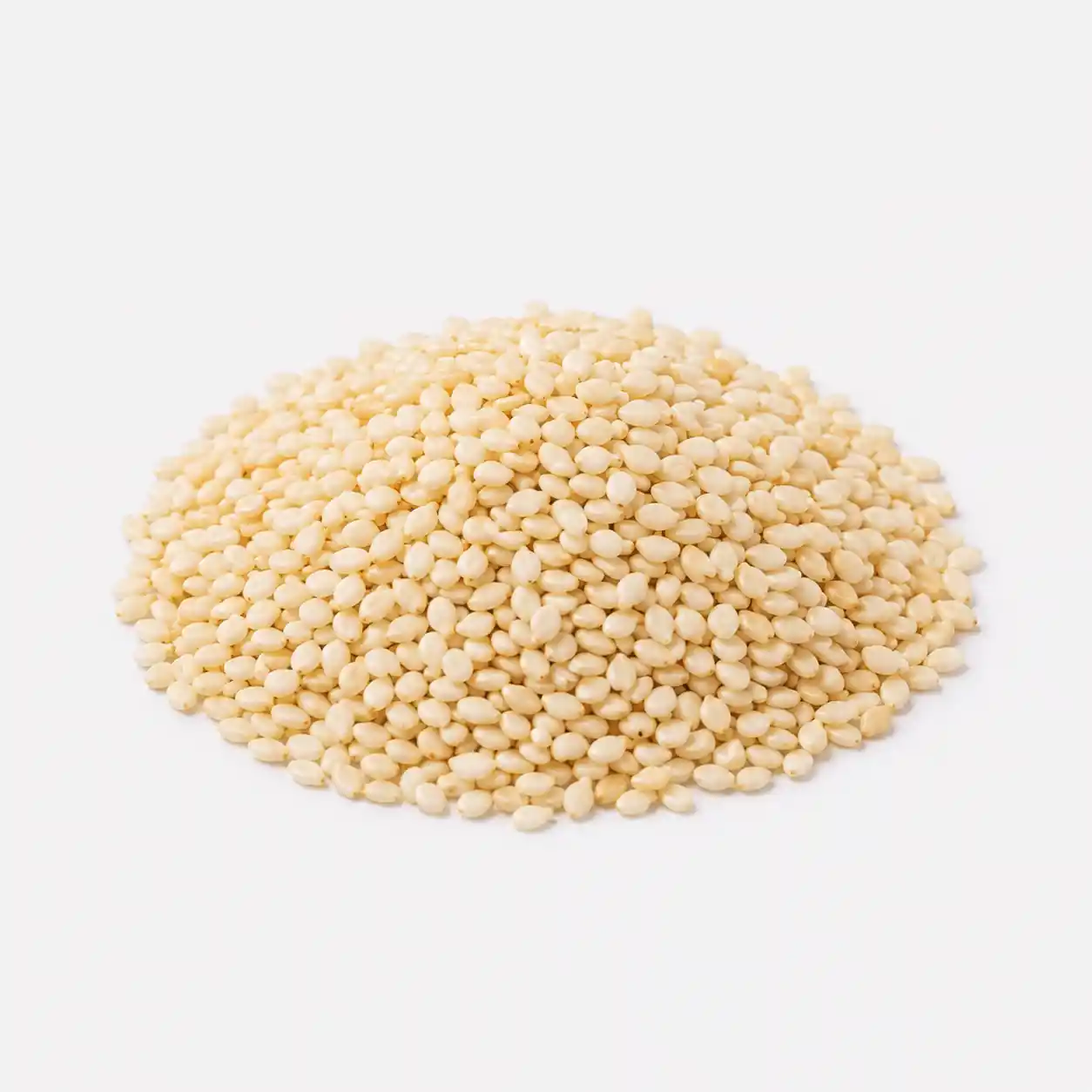
How to serve by age
6+ months
Thin ground sesame or tahini to a smooth, soft consistency. You can also stir tahini into a puree or cereal until smooth.
Offer thinned tahini on a pre-loaded spoon or spread thinly on a soft food with a suitable texture.
9+ months
Add tahini to thicker purees, cereal, and other foods with a suitable soft texture.
Spread tahini thinly on soft foods your baby can pick up.
12+ months
Use tahini or ground sesame as an ingredient in family meals, keeping the texture right for your child.
Use tahini as a thin spread or in soft family foods. Whole sesame seeds aren’t suitable for self-feeding.
Choking risk
Whole sesame seeds and thick sesame paste can be hard to swallow. For babies, sesame is usually offered ground or as tahini thinned until smooth.
Keep your child sitting upright and stay with them throughout the meal.
Allergies
Sesame is one of the major food allergens. A reaction can happen even the first time your baby tries it.
The ninth major allergen
In the US, sesame became the ninth major food allergen. The FASTER Act was signed on April 23, 2021, and since January 1, 2023, all FDA requirements for major allergens, including labeling, apply to sesame. The major allergens in the US are now milk, eggs, fish, crustacean shellfish, tree nuts, peanuts, wheat, soybeans, and sesame.
The FDA warned that products made before that date might stay on shelves without a sesame label. If you’re not sure whether a product contains sesame, the FDA suggests checking with the manufacturer.
Tahini: iron and calcium
100 g of tahini has 9 mg of iron, more than three quarters of the daily amount for babies 7 to 12 months old.
That’s USDA data; the 11 mg target comes from the NIH. The same portion has 426 mg of calcium and 4.6 mg of zinc. Tahini is very high in calories, 595 per 100 g, so a baby’s portions are small.
100 g of tahini also has 95 mg of magnesium, more than the daily amount for babies 7 to 12 months old (75 mg), and 34 mcg of selenium, more than one and a half times the daily amount (20 mcg, according to the NIH).
Where sesame hides
The NHS reminds parents that people can be allergic to any food, including sesame seeds found in some baked goods. When you introduce sesame, check what else is in your baby’s food so you know what a reaction could be from.
Salt in tahini
According to USDA data, 100 g of tahini has 115 mg of sodium. Brands differ, so choose tahini with no added salt.
Sources · 14
This page is based on guidance from health organizations:
- WHO — Complementary feeding
- CDC — When, What, and How to Introduce Solid Foods
- NHS — Food allergies in babies and young children
- CDC — Infant and Toddler Nutrition
- NHS — Your baby's first solid foods
- NHS — Foods to avoid giving babies and young children
- AAP — Starting Solid Foods
- AAAAI — Food Allergy
- FDA — Food Allergies
- USDA FoodData Central — Seeds, sesame butter, tahini
- NIH ODS — Iron
- NHS — Food allergy
- NIH ODS — Magnesium
- NIH ODS — Selenium
For informational purposes only. Not medical advice. Decide on introducing foods, especially allergens, together with your pediatrician.