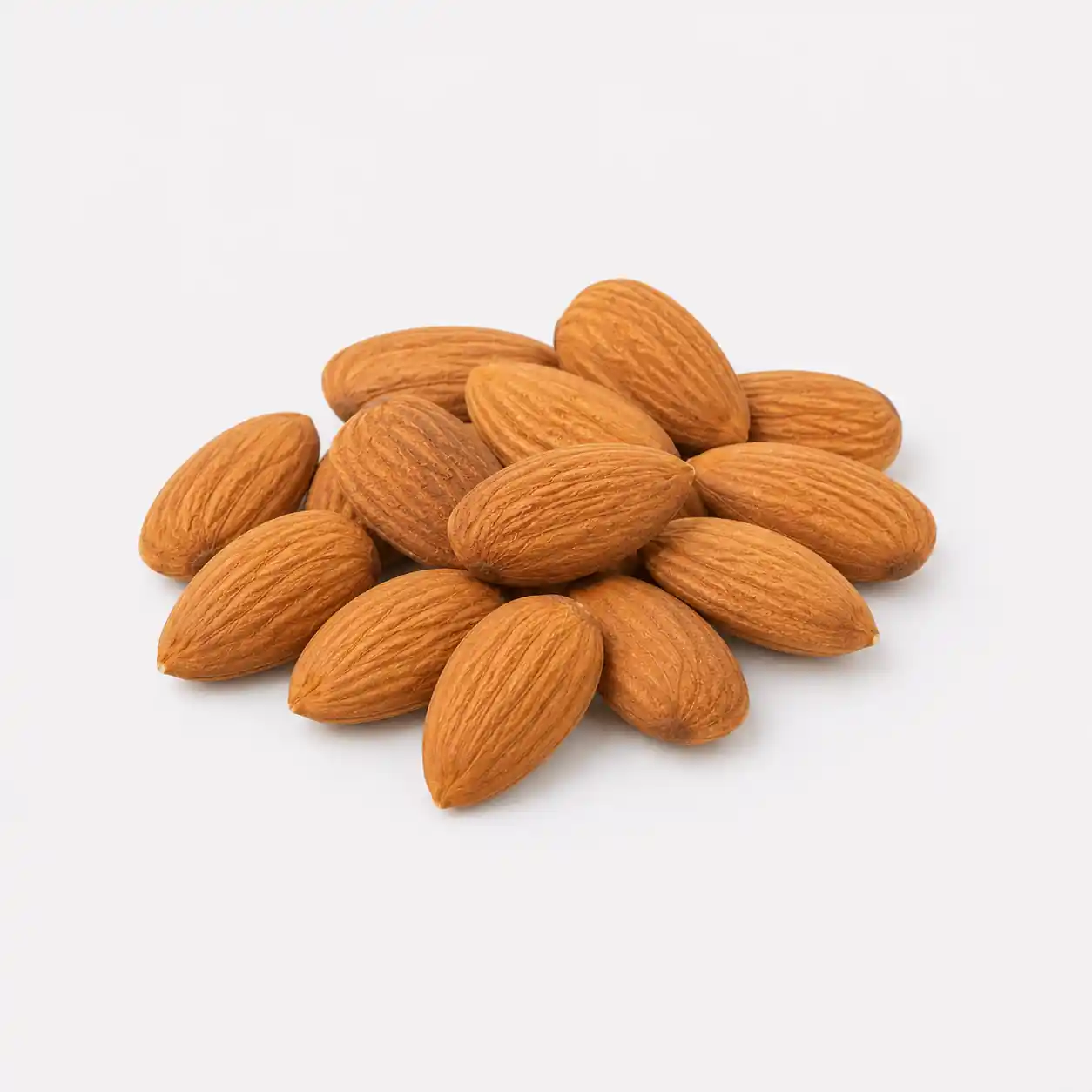
How to serve by age
6+ months
Use only smooth nut butter thinned to a soft, runny texture, or very finely ground nuts stirred into cereal, puree, or yogurt.
Offer thinned smooth nut butter on a pre-loaded spoon or as a very thin layer on a soft food.
9+ months
Mix it well into soft food until the texture is smooth and even; don’t offer dry crumbs or pieces.
Spread it thinly on a soft food your baby holds; keep the layer thin, not a sticky glob.
12+ months
Use it in cooked dishes; don’t offer whole nuts, seeds, or large pieces.
Use it in foods your child eats on their own; don’t offer whole nuts, seeds, or large pieces.
Choking risk
Whole almonds and large nut pieces are a serious choking hazard for young children.
To lower the risk:
- don’t give whole nuts to babies and toddlers;
- use smooth almond butter or very finely ground almonds;
- thin thick nut butters before serving.
Keep your child sitting upright and stay with them throughout the meal.
Allergies
Tree nuts are common food allergens.
Introduce new foods gradually and watch for any reaction.
Vitamin E
100 g of unsalted almond butter has 24 mg of vitamin E.
That’s USDA data. Babies 7 to 12 months old need 5 mg of vitamin E a day (NIH data), so even a teaspoon of almond butter stirred into cereal covers a good share. For comparison, avocado has 2.1 mg per 100 g.
Calcium and magnesium
100 g of almond butter has 347 mg of calcium and 279 mg of magnesium, according to USDA data. For comparison, 100 g of whole cow’s milk has 113 mg of calcium. The NIH lists nuts among sources of magnesium; babies 7 to 12 months old need 75 mg a day. Nut butter is very high in calories, 614 per 100 g, so your baby’s portions are small.
Protein and fiber
The same portion has 21 g of protein and 10 g of fiber. The NHS notes that nuts contain protein too, but whole nuts, including peanuts, shouldn’t be given to children under 5.
100 g of almond butter also has 3.5 mg of iron, 3.3 mg of zinc, more than the daily need for children 7 to 24 months old (3 mg, according to the CDC), and 748 mg of potassium.
Nut allergy usually stays
The American Academy of Allergy, Asthma & Immunology (AAAAI) notes that many children outgrow allergies to cow’s milk, egg, soy, and wheat, but peanut, tree nut, fish, and shellfish allergies tend to persist into adulthood. If your child reacted to almond, plan any reintroduction with an allergist: repeat allergy testing can show whether the allergy is still there.
Sources · 13
This page is based on guidance from health organizations:
- AAP — Choking Prevention
- NHS — Foods to avoid giving babies and young children
- CDC — When, What, and How to Introduce Solid Foods
- NHS — Your baby's first solid foods
- CDC — Choking Hazards
- NHS — Food allergies in babies and young children
- USDA FoodData Central — Nuts, almond butter, plain, without salt
- USDA FoodData Central — Milk, whole, 3.25% milkfat
- NIH ODS — Vitamin E
- NIH ODS — Magnesium
- NHS — What to feed young children
- AAAAI — Food Allergy
- CDC — Zinc
For informational purposes only. Not medical advice. Decide on introducing foods, especially allergens, together with your pediatrician.