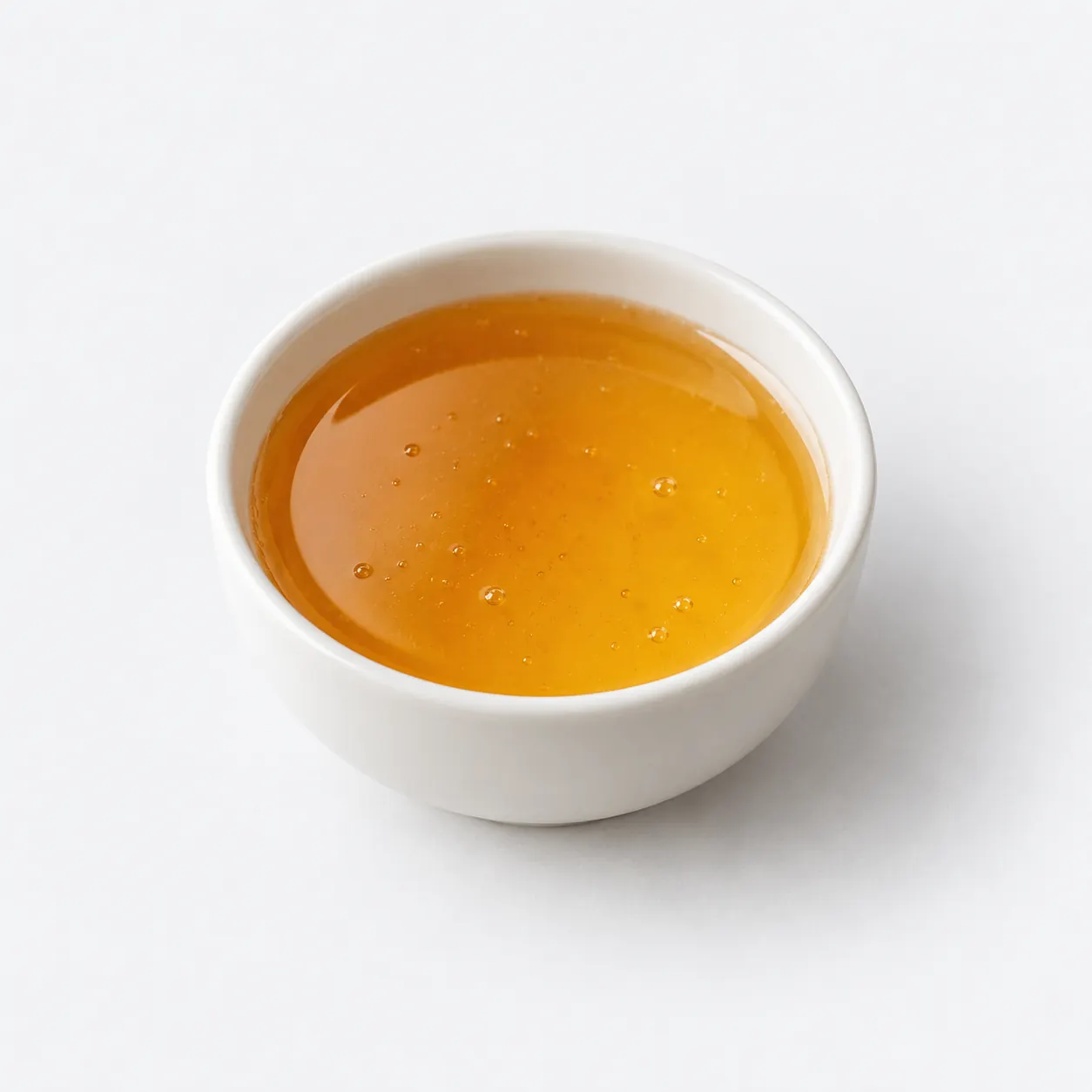
How to serve by age
Do not offer before 12 months. After 12 months, honey can be mixed evenly into soft food.
Do not offer before 12 months. After 12 months, honey can be spread thinly on suitable soft food your child feeds themselves.
Choking risk
Honey has a thick, sticky texture. Avoid offering a thick spoonful.
Keep your child sitting upright and stay with them throughout the meal.
Allergies
Individual allergic reactions are possible.
After age 1, still not every day
Honey is off the menu before the first birthday, but there’s no rush after that either. The NHS advises against food and drinks with sugar or sweeteners for children 4 and under, and it specifically includes the natural sugar in honey, syrups, fruit juice, and smoothies. Eating fruit is fine.
The NHS counts the sugar in honey as free sugar, the same as sugar added to cookies or sweet drinks, even though it occurs naturally. Sugar found naturally in milk, fruit, and vegetables doesn’t count as free sugar.
Almost pure sugar
100 g of honey has 82 g of sugars.
That’s USDA data: about 41 g of fructose and 36 g of glucose, with most of the rest being water. Honey has almost no protein, vitamins, or minerals. It’s close to sugar in calories, at 304 per 100 g.
Honey and teeth
The NHS reminds parents that honey is a sugar, so holding off on it also helps protect your child’s teeth from decay.
Honey for a cough
The NHS describes a warm lemon and honey drink as a home remedy for coughs that may work much like cough syrup, though it notes there’s limited evidence it helps. Because of the honey, it isn’t suitable for babies under 1. For an older child, serve it warm, not hot: the NHS advises against hot drinks for small children.
Sources · 8
This page is based on guidance from health organizations:
For informational purposes only. Not medical advice. Decide on introducing foods, especially allergens, together with your pediatrician.