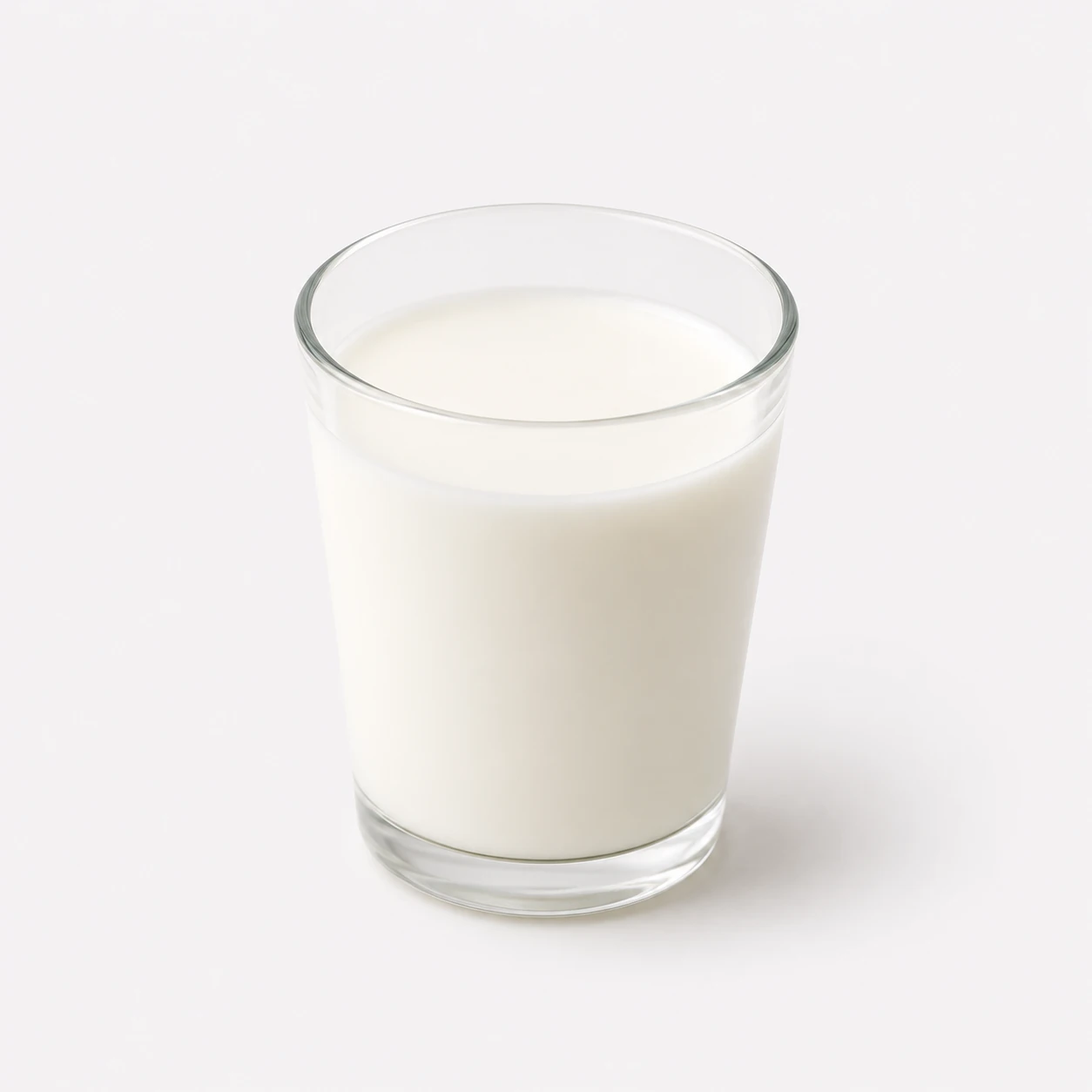
How to serve by age
6+ months
Cow’s milk isn’t given by the spoonful on its own or used as a main drink.
9+ months
Cow’s milk still isn’t used as a main drink.
12+ months
Offer pasteurized cow’s milk from a cup, not a spoon.
Choking risk
Milk isn’t usually considered a choking risk, but offer it in a cup that suits your child’s age.
Keep your child sitting upright and stay with them while they drink.
Allergies
Cow’s milk protein is one of the major food allergens. A reaction can happen even the first time your baby tries it.
Why not before age 1
The CDC gives three reasons not to give whole cow’s milk as a drink before 12 months: it may raise the risk of intestinal bleeding, it has too much protein and too many minerals for a baby’s kidneys, and it doesn’t have the right mix of nutrients a baby needs. The NHS adds that cow’s milk can be used in cooking or mixed into food, such as cereal, from around 6 months.
Which milk after age 1
The NHS says pasteurized whole or reduced-fat (2%) milk can become the main drink from age 1. Skim and 1% milk aren’t suitable as a main drink for children under 5 because they don’t have enough calories, though lower-fat milk can be used in cooking from age 1. Young children shouldn’t have unpasteurized milk because of the higher risk of food poisoning.
How much milk
The CDC says children 12 to 23 months old need about 2 servings of dairy a day, such as milk, full-fat yogurt, or cheese. But milk doesn’t replace food. A child who drinks too much milk may not be hungry for other foods, and some experts say too much milk can make it harder to absorb iron.
Calcium and vitamin D
100 g of whole milk has 113 mg of calcium.
That’s USDA data. Children 1 to 3 years old need 700 mg of calcium a day, according to the NIH. Almost all milk in the US is fortified with about 3 mcg of vitamin D per cup, while cheese and ice cream usually aren’t. Children 1 to 13 need 15 mcg of vitamin D a day.
Goat’s and sheep’s milk
The NHS warns that goat’s and sheep’s milk, like cow’s milk, aren’t suitable as a main drink before age 1, since they lack enough iron and other nutrients. After age 1, pasteurized goat’s or sheep’s milk can be the main drink.
Sources · 8
This page is based on guidance from health organizations:
- WHO — Complementary feeding
- CDC — Cow's Milk and Milk Alternatives
- NHS — Drinks and cups for babies and young children
- AAAAI — Food Allergy
- NHS — Food allergies in babies and young children
- USDA FoodData Central — Milk, whole, 3.25% milkfat, with added vitamin D
- NIH ODS — Calcium
- NIH ODS — Vitamin D
For informational purposes only. Not medical advice. Decide on introducing foods, especially allergens, together with your pediatrician.