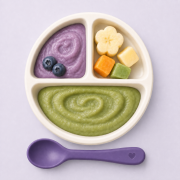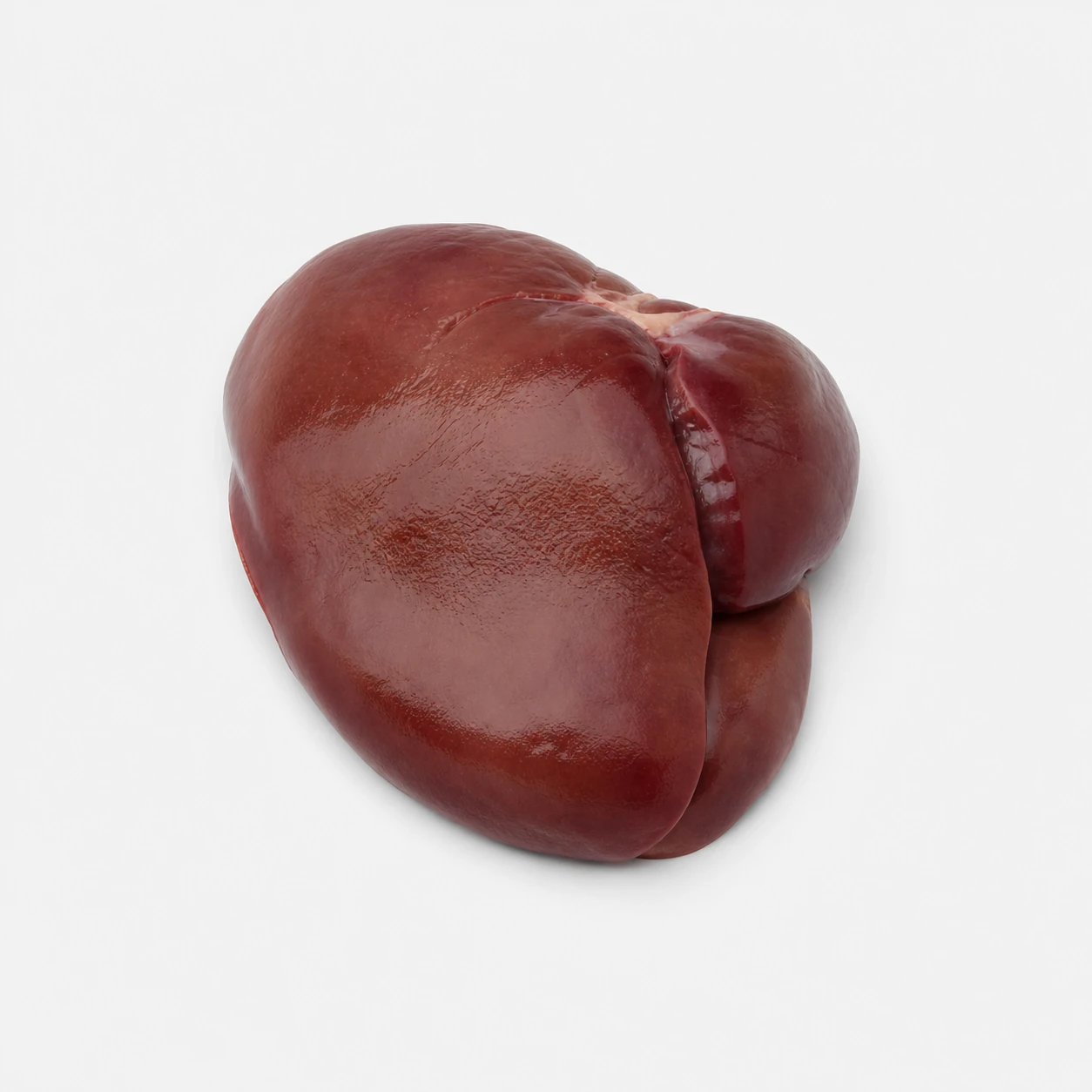
How to serve chicken liver at 6 and 9 months
Ages are approximate; go by your baby’s skills.
Ages are approximate; go by your baby’s skills.
6+ months
Remove the membranes and veins, cook the liver through, and blend it into a puree or homemade pâté with no added salt. Add a little water or vegetable puree so the mixture is soft and moist. Another option is soft liver pancakes cooked all the way through: mash them and mix them with vegetable puree if needed.
Offer homemade pâté made from fully cooked liver with no added salt, on a pre-loaded spoon or spread thinly on a long strip of bread. Lightly toast white bread without a hard crust. You can make soft liver pancakes with no hard crust, cooked all the way through, and cut them into long strips so part of each strip sticks out of your baby’s fist.
9+ months
If your baby manages soft pieces, offer small soft pieces of fully cooked liver or liver pancakes without mashing. Mix dry liver with vegetable puree or sauce.
Offer liver and liver dishes no more than once a week, counting all types of liver together.
Once your baby has developed a pincer grasp, offer small soft pieces of fully cooked liver or liver pancakes. The pieces should squish easily between your fingers; chop dry, crumbly liver and mix it with vegetable puree.
Offer liver and liver dishes no more than once a week, counting all types of liver together.
Choking risk
Chicken liver should be fully cooked to 165°F (74°C) and soft. Dense or dry pieces can be hard to swallow, so chop them finely or offer a puree, depending on your child’s age.
Keep your child sitting upright and stay with them throughout the meal.
Allergies
Individual allergic reactions are possible.
Iron, B12, and folate
According to USDA data, 100 g of simmered chicken liver has 11.6 mg of iron. Babies 7 to 12 months old need 11 mg of iron a day (NIH data), so 100 g of liver covers a full day. The same portion has 16.9 mcg of vitamin B12 against a daily need of 0.5 mcg, and 578 mcg of folate against 80 mcg (NIH data).
Vitamin A: a lot in a little
100 g of simmered chicken liver has 3,981 mcg of vitamin A, 6.6 times the upper limit for babies under 1 year.
That’s USDA data. The NIH sets the upper limit of preformed vitamin A for babies up to 12 months at 600 mcg a day, counting all food and supplements. Preformed vitamin A is found in animal foods such as liver. Just 15 g of chicken liver has about 600 mcg. So liver works as a small side portion, not the base of every meal.
Pâté and liver that’s pink inside
The CDC warns that Campylobacter bacteria can live inside chicken liver, not just on the surface. If the center doesn’t reach 165°F (74°C), the bacteria survive. Rinsing the liver doesn’t help. Liver pâté and mousse are often undercooked to keep them smooth, and once blended and chilled, you can’t tell by looking. The CDC links such pâtés to outbreaks, and very young children are among those who can get seriously ill.
Cook your baby’s liver all the way to 165°F (74°C) inside, like any chicken, and check with a thermometer.
Sources · 18
This page is based on guidance from health organizations:
- CDC — When, What, and How to Introduce Solid Foods
- NHS — From around 6 months
- NHS — Vitamin A
- USDA FoodData Central — Chicken, liver, all classes, raw
- CDC — Iron
- NHS — Preparing food safely for babies
- Worcestershire Acute Hospitals NHS — Iron in your child's diet
- Food Standards Agency — Cooking your food
- FoodSafety.gov — Safe Minimum Internal Temperatures
- AAAAI — Food Allergy
- NHS — Food allergies in babies and young children
- USDA FoodData Central — Chicken, liver, all classes, cooked, simmered
- NIH ODS — Iron
- NIH ODS — Vitamin B12
- NIH ODS — Folate
- NIH ODS — Vitamin A and Carotenoids
- CDC — Cooking Chicken Liver
- USDA FSIS — Chicken Liver
For informational purposes only. Not medical advice. Decide on introducing foods, especially allergens, together with your pediatrician.