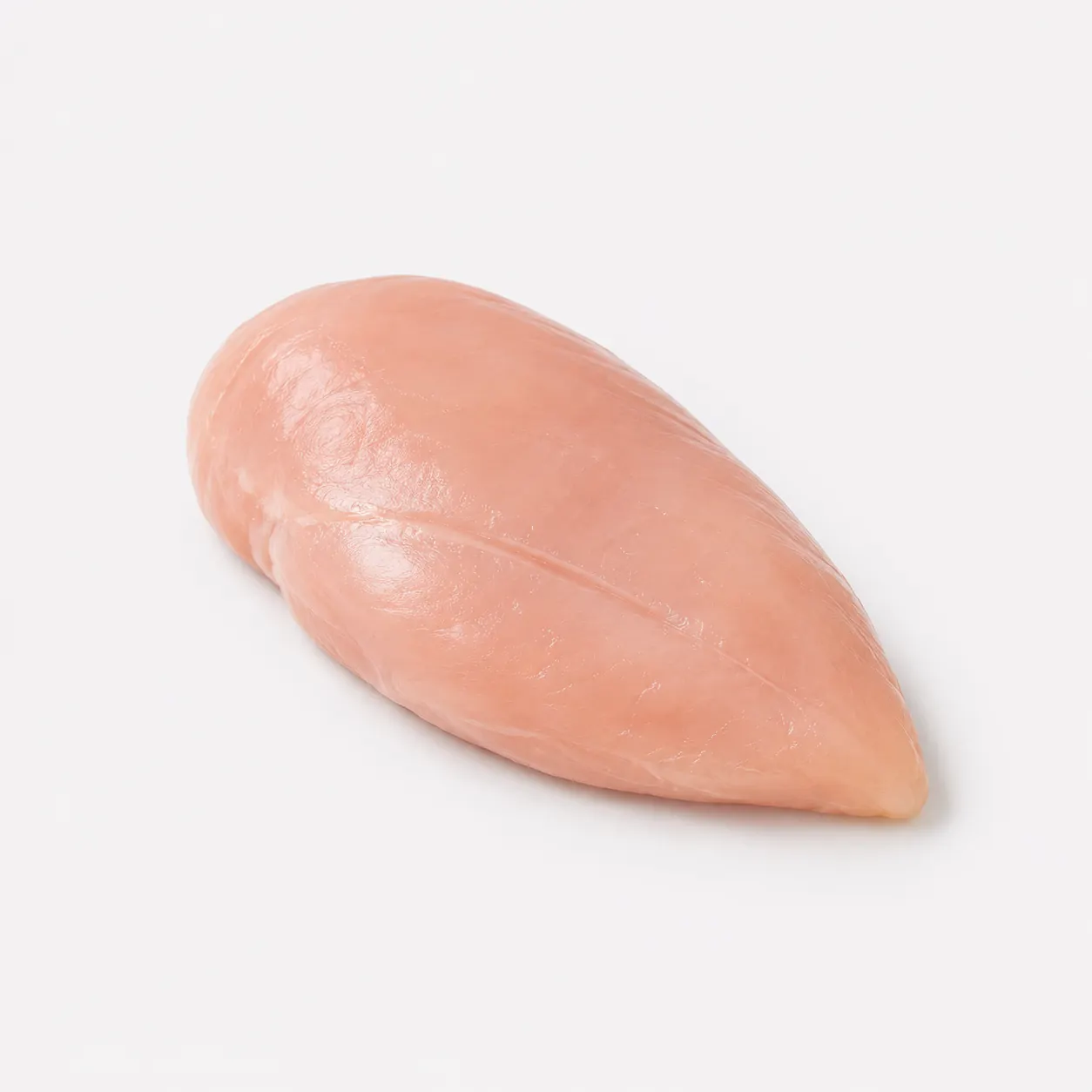
How to serve by age
6+ months
Finely shred fully cooked chicken or blend it until soft and smooth.
Offer a large, very soft strip of fully cooked chicken that’s easy to hold.
9+ months
Offer small soft pieces or soft shreds of fully cooked chicken.
Offer soft pieces or shreds of chicken your baby can pick up.
12+ months
Serve soft pieces of fully cooked chicken as part of family meals.
Offer strips or pieces of fully cooked chicken for your child to eat on their own.
Choking risk
Chicken should always be fully cooked and soft. Dry, dense pieces can be hard to swallow, so shred the meat finely or offer a puree, depending on your child’s age.
Keep your child sitting upright and stay with them throughout the meal.
Allergies
Individual allergic reactions are possible.
Don’t wash raw chicken
The CDC is clear: raw chicken is ready to cook and doesn’t need washing. Splashing spreads germs around the sink and kitchen. In a USDA study the CDC cites, 1 in 7 people who cleaned their sink after washing chicken still had germs in it.
Cut raw chicken on a separate board, and never put cooked food or fresh produce where raw chicken has been. Wash boards, knives, and counters with hot, soapy water afterward, and wash your hands with soap for at least 20 seconds.
Check doneness with a thermometer
165°F (74°C) inside is the safe temperature for chicken.
The CDC advises using a food thermometer rather than judging by eye. The USDA gives the same temperature for ground chicken dishes like meatballs. Store raw chicken on the bottom shelf of the fridge, sealed so the juices can’t drip onto other foods.
Thigh or breast
According to USDA data, 100 g of roasted skinless thigh has 1.9 mg of zinc, while breast has 1 mg. Thigh has more fat too, 8.2 g versus 3.6 g, so it stays juicier and softer. Children 7 to 24 months old need 3 mg of zinc a day, and the CDC lists meat among its sources.
Breast has more vitamin B6: 0.6 mg per 100 g, twice the daily amount for babies 7 to 12 months old (0.3 mg, according to the NIH). Both thigh and breast have about 27 mcg of selenium, more than the daily amount (20 mcg).
Leftovers
The CDC advises refrigerating or freezing leftover chicken within 2 hours of cooking, or within 1 hour if it’s above 90°F (32°C). It helps to set aside your baby’s portion in its own container right away.
Sources · 13
This page is based on guidance from health organizations:
- WHO — Complementary feeding
- CDC — When, What, and How to Introduce Solid Foods
- AAP — Starting Solid Foods
- CDC — Infant and Toddler Nutrition
- NHS — Foods to avoid giving babies and young children
- NHS — Food allergies in babies and young children
- CDC — Chicken and Food Poisoning
- USDA FoodData Central — Chicken, thigh, meat only, roasted
- USDA FoodData Central — Chicken, breast, meat only, roasted
- CDC — Zinc
- USDA FSIS — Safe Minimum Internal Temperature Chart
- NIH ODS — Vitamin B6
- NIH ODS — Selenium
For informational purposes only. Not medical advice. Decide on introducing foods, especially allergens, together with your pediatrician.