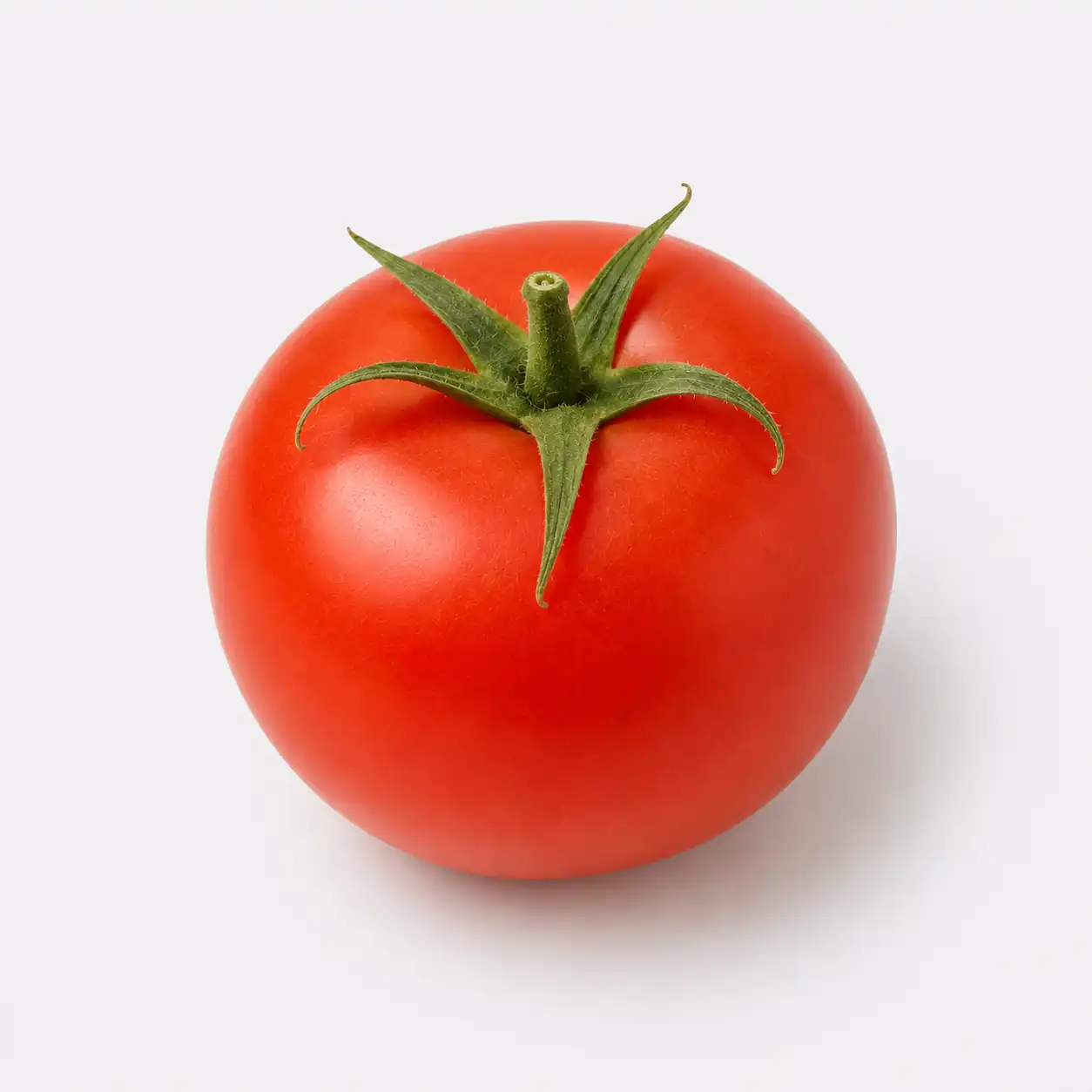
How to serve by age
6+ months
Cook until soft and offer as a smooth puree or mash it well.
Offer a large, soft wedge of ripe tomato that your baby can grasp. Cook firm tomatoes until soft.
9+ months
Offer a thicker mash with small soft pieces.
Offer soft wedges or small pieces suited to your child’s eating skills. Cut small, round tomatoes lengthwise into quarters; don’t offer them whole.
12+ months
Offer it finely chopped and soft in dishes your child eats with a spoon.
Choking risk
Large or firm pieces of raw tomato can be hard for young children to manage. Serve tomatoes soft, peeled if needed, and cut into suitable pieces. Always cut small tomatoes before serving.
Keep your child sitting upright and stay with them throughout the meal.
Allergies
Individual allergic reactions are possible.
Vitamin C and potassium
100 g of fresh tomato has 14 mg of vitamin C, more than a quarter of the daily amount for babies 7 to 12 months old.
That’s USDA data; the 50 mg target comes from the NIH. The same portion has 237 mg of potassium, about a quarter of the daily amount (860 mg), and 42 mcg of vitamin A. The NIH lists tomatoes among vitamin C foods that help the body absorb iron from plant foods. Tomatoes are very low in calories, at 18 per 100 g.
100 g of tomato also has 0.5 mg of vitamin E, 8 mcg of vitamin K, three times the daily amount for babies 7 to 12 months old (2.5 mcg, according to the NIH), and 15 mcg of folate.
Canned tomatoes
Canned tomatoes are handy for sauces and soups, but they usually have added salt. According to USDA data, 100 g of tomatoes canned in juice has 115 mg of sodium, while fresh tomatoes have 5 mg. The NHS advises against salty food for babies and against salting their meals. Look for cans labeled “no salt added” and compare labels.
Ketchup isn’t a tomato
Ketchup starts with tomatoes but ends up very different. According to USDA data, 100 g of ketchup has 907 mg of sodium and 21 g of sugars, while fresh tomato has 5 mg of sodium and 2.6 g of sugars. The NHS advises against foods with added sugar for children 4 and under and against salty food for babies. A homemade tomato sauce without salt or sugar is a better pick for your baby.
Sources · 15
This page is based on guidance from health organizations:
- WHO — Complementary feeding
- NHS — Your baby's first solid foods
- NHS — Feeding your baby from around 6 months
- NHS — 10 to 12 months feeding guidance
- NHS — Preparing food safely
- NHS — Choking and gagging on food
- NHS — Food allergies in babies and young children
- USDA FoodData Central — Tomatoes, red, ripe, raw
- USDA FoodData Central — Tomatoes, red, ripe, canned, packed in tomato juice
- USDA FoodData Central — Catsup
- NIH ODS — Vitamin C
- NIH ODS — Potassium
- NIH ODS — Iron
- NHS — Foods to avoid giving babies and young children
- NIH ODS — Vitamin K
For informational purposes only. Not medical advice. Decide on introducing foods, especially allergens, together with your pediatrician.