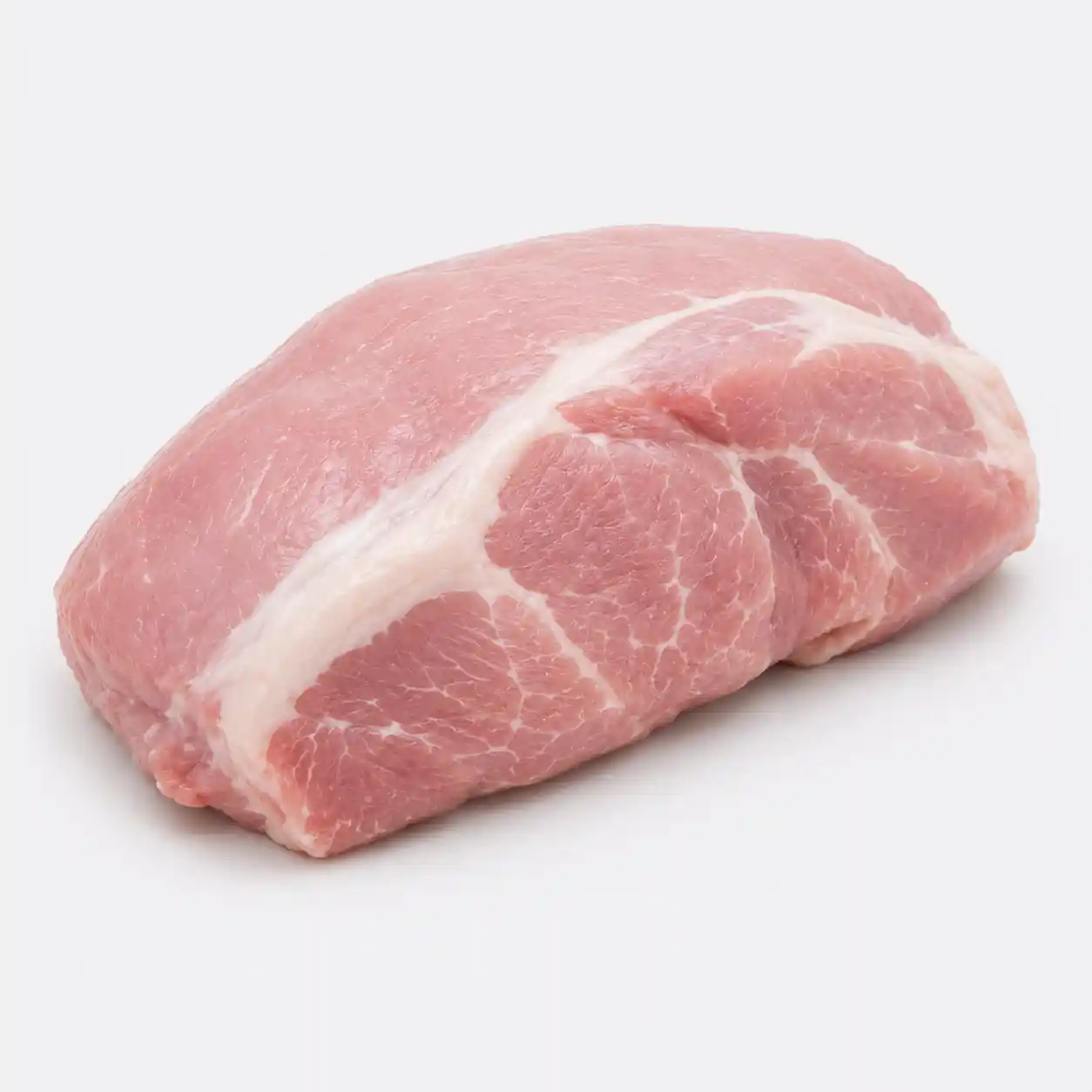
How to serve pork at 6 and 9 months
Ages are approximate; go by your baby’s skills.
Ages are approximate; go by your baby’s skills.
6+ months
Remove bones, tough gristle, and visible fat. Boil or stew the pork until fully cooked and soft. Blend it with a little water or vegetable puree; serve on its own or with vegetables.
Offer fully cooked, tender pork in long strips that stick out of the fist. Cut across the grain and remove bones, fat, and tough gristle. If the meat is still tough, stew it longer or offer it chopped on a pre-loaded spoon.
9+ months
If your baby manages soft pieces, pull stewed pork into short shreds or chop it finely across the grain. Serve with vegetables, cereal, or in a thick soup, keeping the meat moist.
18–24 months: if your child bites and chews meat confidently, offer juicy, fully cooked pork in thin, short strips cut across the grain or in small pieces. You don’t need to pull the meat into short shreds every time. Remove bones, tough gristle, and hard parts; don’t offer dry, tough meat.
Once your baby has a pincer grasp, offer small soft pieces or short shreds of stewed pork.
18–24 months: if your child bites and chews meat confidently, offer juicy, fully cooked pork in thin, short strips cut across the grain or in small pieces. You don’t need to pull the meat into short shreds every time. Remove bones, tough gristle, and hard parts; don’t offer dry, tough meat.
Choking risk
Dry, tough, or large pieces of meat can be hard for young children to chew safely.
To lower the risk:
- cook meat until tender;
- finely shred or mince it into soft strands;
- avoid large dense chunks.
Keep your child sitting upright and stay with them throughout the meal.
Allergies
Individual allergic reactions are possible.
Thiamin
100 g of roasted pork tenderloin has 0.95 mg of thiamin, more than three times the daily amount for babies 7 to 12 months old.
That’s USDA data; babies 7 to 12 months old need 0.3 mg of thiamin (vitamin B1) a day, according to the NIH. The NIH names meat, especially pork, as a top food source of thiamin. It helps the body turn food into energy.
Tenderloin or ground pork
Pork varies a lot in fat. According to USDA data, 100 g of roasted tenderloin has 3.5 g of fat and 143 calories, while 100 g of cooked ground pork has 20.8 g of fat and 297 calories. Lean cuts like tenderloin or trimmed loin are easier for babies. The same tenderloin has 2.4 mg of zinc, nearly all of the daily need for children 7 to 24 months old (3 mg, according to the CDC).
A pink center and ground pork
The USDA says pork chops, steaks, and roasts are safe at 145°F (63°C) with a 3-minute rest. It also notes that pork cooked to 145°F (63°C) all the way through is safe even if the center is still pink. Ground pork is different: cook patties and meatballs made from it to 160°F (71°C).
Trichinellosis
Pork used to be cooked until dry because of trichinellosis, an illness caused by parasites in raw meat. The CDC says it’s now rare in North America and most often comes from wild game. The risk remains with undercooked pork from noncommercial sources, such as privately raised or wild boar. Thorough cooking is the only reliable way to kill the parasite.
Sources · 14
This page is based on guidance from health organizations:
- NHS — From around 6 months
- USDA FoodData Central — Pork, fresh, composite of trimmed retail cuts (leg, loin, shoulder), separable lean only, raw
- NHS — Preparing food safely for babies
- FoodSafety.gov — Safe Minimum Internal Temperatures
- CDC — Choking Hazards
- NHS — Food allergies in babies and young children
- USDA FoodData Central — Pork, fresh, loin, tenderloin, separable lean only, cooked, roasted
- USDA FoodData Central — Pork, fresh, ground, cooked
- NIH ODS — Thiamin
- CDC — Zinc
- USDA FSIS — Safe Minimum Internal Temperature Chart
- USDA FSIS — Fresh Pork from Farm to Table
- CDC MMWR — Outbreak of Human Trichinellosis, 2022
- CDC MMWR — Trichinellosis Outbreak Linked to Privately Raised Raw Boar Meat
For informational purposes only. Not medical advice. Decide on introducing foods, especially allergens, together with your pediatrician.