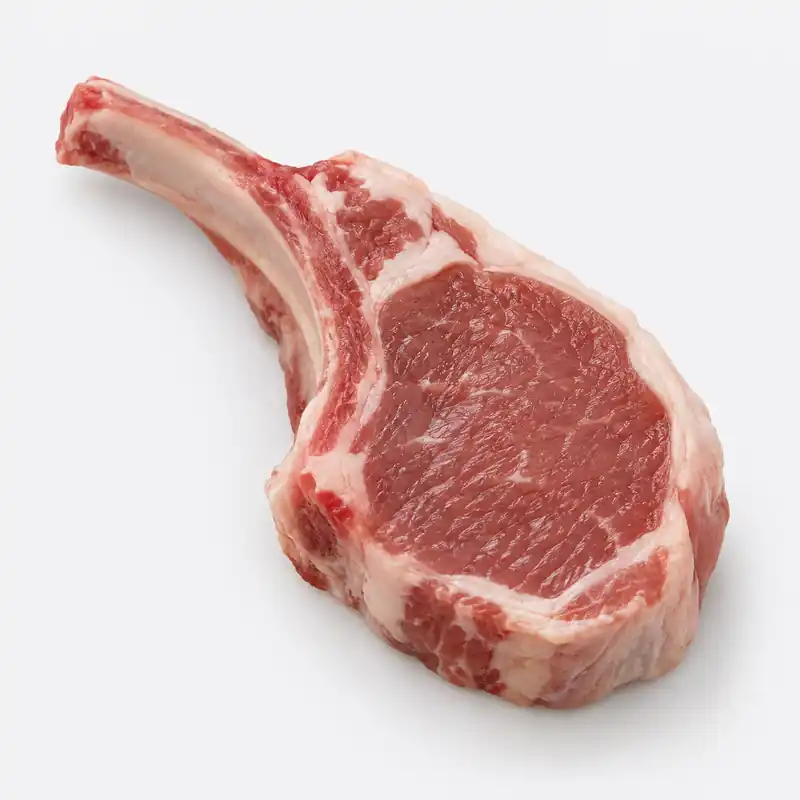
How to serve by age
6+ months
Puree thoroughly cooked, tender lamb until smooth and offer it from a spoon.
Offer a finger-length strip of thoroughly cooked, very tender lamb with no bones or fat for your baby to hold.
9+ months
Offer finely chopped soft meat or short, thin shreds.
Offer thin, soft strips or pulled, tender shreds.
12+ months
Serve small, tender pieces with no bones, fat, or tough connective tissue.
Offer small, tender pieces your baby can pick up; remove any tough parts.
Choking risk
Tough or large pieces of meat, bones, and chewy connective tissue can be choking hazards. Remove bones and fat, cook lamb until tender, and serve it finely chopped or in thin, soft strips.
Keep your child sitting upright and stay with them throughout the meal.
Allergies
Individual allergic reactions are possible.
Fattier than beef
100 g of lean lamb has 7 g of fat, compared with 21 g in lamb with its fat left on.
That's USDA data for cooked meat. Ground lamb has 19.7 g of fat, 8.1 g of it saturated, while 85% lean ground beef has 15.4 g and 5.9 g. The NHS notes that too much saturated fat can raise cholesterol and advises the whole family to choose lean cuts: the more white you can see on meat, the more fat it contains. The NHS suggests trimming visible fat before cooking, skipping added oil, and roasting meat on a rack above a tin so the fat can drip off.
What's in lean lamb
According to the USDA, 100 g of cooked lean lamb shoulder has 27 g of protein, 2.2 mg of iron, about a fifth of the daily amount for babies 7 to 12 months old (11 mg), 6.6 mg of zinc, more than twice the daily need for children 7 to 24 months old (3 mg), 3.1 mcg of vitamin B12, more than six times the daily amount (0.5 mcg), and 31 mcg of selenium, one and a half times the daily amount (20 mcg). The targets come from the NIH and the CDC.
Less meat, more vegetables
The NHS suggests using less meat in stews, curries and casseroles and swapping some of it for vegetables, pulses and starchy foods. A lamb dish like that works for the whole family; mash or cut your baby's portion to suit their age.
How to thaw it
The NHS advises freezing raw meat before its use-by date and labeling it with the date. Thaw meat in the microwave on the defrost setting only if you're cooking it right away. If you're cooking it later, thaw it fully in the fridge and use it within 2 days. Thawing meat releases liquid that spreads bacteria, so keep it in a sealed container. Thawed raw meat can be frozen again once it's fully cooked, but reheat a cooked dish only once.
Sources · 16
This page is based on guidance from health organizations:
- NHS — Tender lamb strips
- CDC — Iron
- CDC — When, What, and How to Introduce Solid Foods
- NHS — Preparing food safely for babies
- CDC — Choking Hazards
- NHS — Food allergies in babies and young children
- USDA FoodData Central — Lamb, cubed for stew or kabob (leg and shoulder), separable lean only, trimmed to 1/4" fat, cooked, broiled
- USDA FoodData Central — Lamb, composite of trimmed retail cuts, separable lean and fat, trimmed to 1/4" fat, choice, cooked
- USDA FoodData Central — Lamb, ground, cooked, broiled
- USDA FoodData Central — Beef, ground, 85% lean meat / 15% fat, patty, cooked, broiled
- NHS — Meat in your diet
- USDA FoodData Central — Lamb, shoulder, whole (arm and blade), separable lean only, trimmed to 1/4" fat, choice, cooked, broiled
- NIH ODS — Iron
- CDC — Zinc
- NIH ODS — Vitamin B12
- NIH ODS — Selenium
For informational purposes only. Not medical advice. Decide on introducing foods, especially allergens, together with your pediatrician.