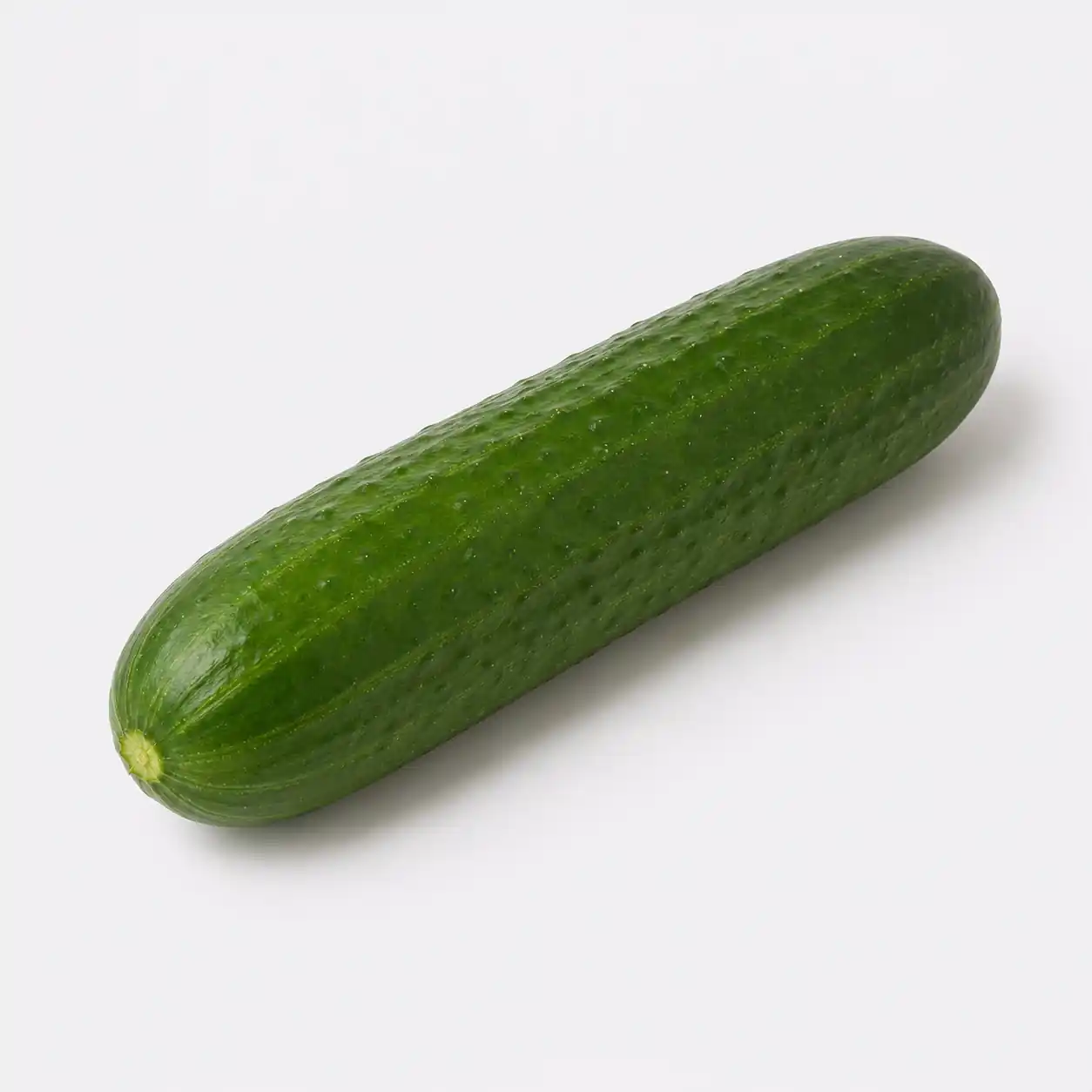
How to serve by age
6+ months
Wash the cucumber thoroughly, peel it, and finely grate it. Mix into plain yogurt with no added sugar or vegetable puree.
Wash the cucumber thoroughly, remove any tough skin, and cut it lengthwise into sticks your baby can hold in their fist, with part sticking out. If the flesh is firm, offer finely grated cucumber mixed into soft food on a pre-loaded spoon.
9+ months
Offer finely grated, peeled cucumber mixed into a soft dish.
Continue offering lengthwise sticks suited to your baby’s eating skills, or finely grated cucumber mixed into soft food for self-feeding.
12+ months
Add finely grated cucumber to salads and other foods your child eats with a spoon. Don’t offer firm cubes or thick, round slices.
Offer cucumber in lengthwise sticks or grated into meals. Don’t offer firm cubes or thick, round slices.
Choking risk
Firm pieces of cucumber and thick, round slices can cause choking.
To lower the risk:
- remove tough skin;
- for finger feeding, cut cucumber lengthwise into sticks suited to your child’s eating skills;
- if the flesh is firm, finely grate the cucumber and mix it into soft food;
- don’t offer firm cubes or thick, round slices.
Keep your child sitting upright and stay with them throughout the meal.
Allergies
People with a ragweed pollen allergy may cross-react to cucumber.
Individual allergic reactions are possible.
Pickles are a different food
100 g of dill pickle has 809 mg of sodium, 400 times as much as fresh cucumber.
That’s USDA data: fresh cucumber has 2 mg of sodium. Pickles aren’t for babies. The NHS advises against salty food for babies, because too much salt isn’t good for their kidneys, and against salting their meals. Even reduced-sodium pickles have 18 mg of sodium per 100 g, according to USDA data, 9 times as much as fresh cucumber.
The peel and vitamin K
A good share of a cucumber’s vitamin K is in the peel. According to USDA data, 100 g of cucumber with the peel has 16 mcg of vitamin K, and peeled cucumber has 7 mcg. Vitamin K helps blood clot and keeps bones healthy.
Few calories and vitamins
100 g of cucumber with the peel has 95 g of water and just 15 calories, according to USDA data. It’s low in vitamins C and A, at 2.8 mg and 5 mcg per 100 g. Cucumber is refreshing and adds variety, but it gives your baby few nutrients, so it doesn’t replace other vegetables.
100 g of cucumber has 147 mg of potassium and 13 mg of magnesium.
How much is a portion
The NHS gives an adult vegetable portion as a 2-inch (5 cm) piece of cucumber. A few thin sticks or some grated cucumber in a dish is enough for a baby.
Sources · 12
This page is based on guidance from health organizations:
- WHO — Complementary feeding of infants and young children
- CDC — Foods and Drinks for 6 to 24 Month Olds
- NHS — Preparing food safely for babies
- WHO — Complementary feeding
- NHS — Choking and gagging on food
- USDA FoodData Central — Pickles, cucumber, dill
- USDA FoodData Central — Pickles, cucumber, dill, reduced sodium
- USDA FoodData Central — Cucumber, with peel, raw
- USDA FoodData Central — Cucumber, peeled, raw
- NHS — Foods to avoid giving babies and young children
- NIH ODS — Vitamin K
- NHS — 5 A Day portion sizes
For informational purposes only. Not medical advice. Decide on introducing foods, especially allergens, together with your pediatrician.