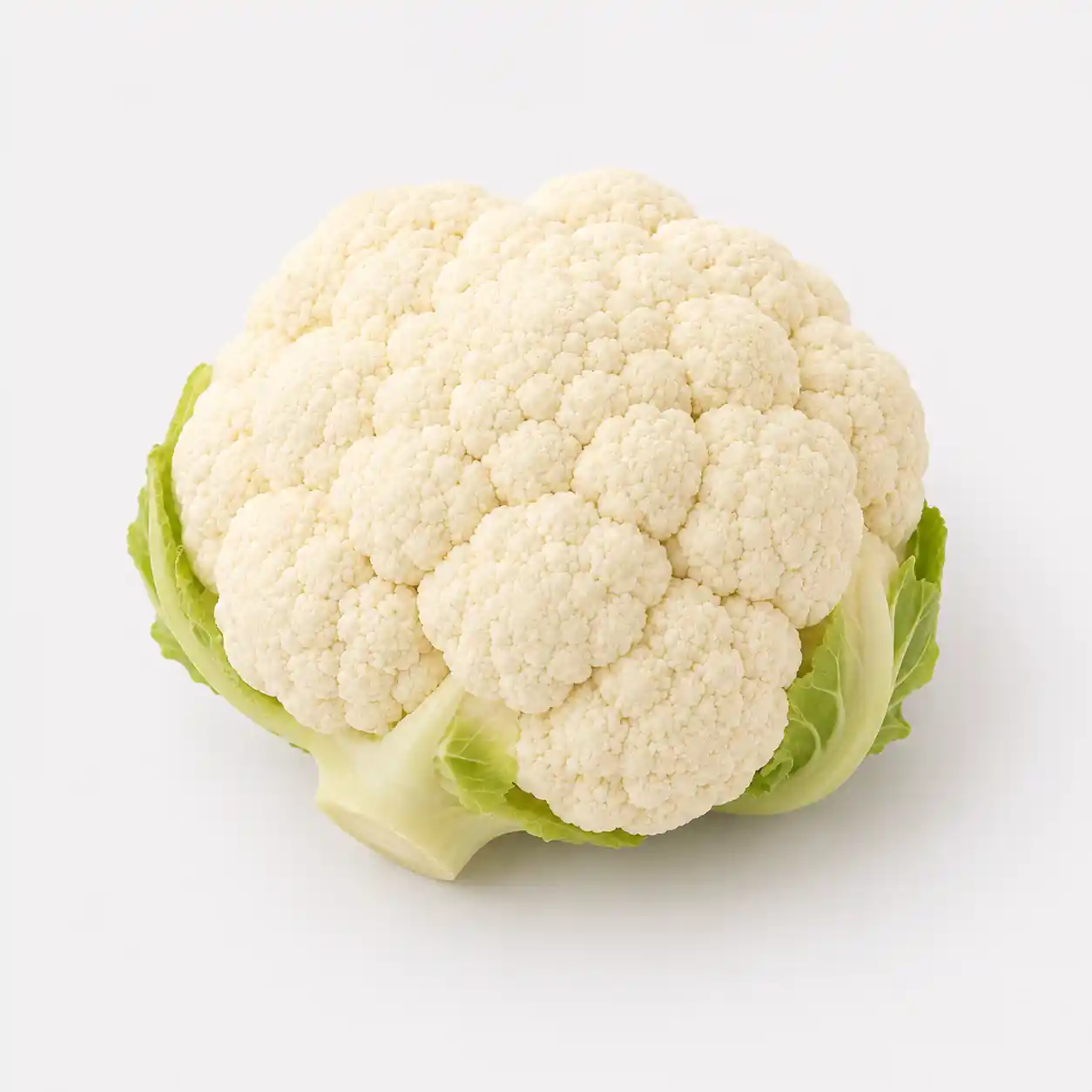
How to serve by age
6+ months
Cook until soft and offer as a smooth puree or mash it well.
Cook until soft and offer a large soft piece that’s easy to hold.
9+ months
Offer a thicker mash with small soft pieces.
Offer soft florets or pieces for self-feeding.
12+ months
Offer it finely chopped and soft in dishes your child eats with a spoon.
Offer small soft pieces as part of a family meal.
Choking risk
Raw or undercooked cauliflower can be too firm for babies. Cook cauliflower until very soft before serving.
Keep your child sitting upright and stay with them throughout the meal.
Allergies
Cauliflower isn’t considered a common food allergen. Individual allergic reactions are still possible.
Vitamin C without the tang
100 g of cooked cauliflower has 44 mg of vitamin C, nearly the full daily amount for babies 7 to 12 months old.
That’s USDA data; the 50 mg target comes from the NIH. Cauliflower is neither sweet nor sour, so its vitamin C is easy to overlook. According to the NIH, the body needs vitamin C to make collagen, a protein needed for wounds to heal, and for the immune system to work properly.
Choline
100 g of cooked cauliflower has 39 mg of choline, about a quarter of what babies 7 to 12 months old need in a day (150 mg). According to USDA data, that’s noticeably more than in cooked zucchini, for example (9 mg). Choline is needed for the brain and nervous system.
Vitamin B6 and fiber
The same portion has 0.17 mg of vitamin B6, more than half the daily amount (0.3 mg, according to the NIH), and 2.3 g of fiber. It’s low in calories, at 23 per 100 g.
100 g of cooked cauliflower also has 44 mcg of folate, more than half the daily amount for babies 7 to 12 months old (80 mcg, according to the NIH), 14 mcg of vitamin K, five times the daily amount (2.5 mcg), and 142 mg of potassium.
How much is a portion
The NHS gives an adult vegetable portion as 8 cauliflower florets. One or two soft florets or a few spoonfuls of puree is enough for a baby.
Sources · 16
This page is based on guidance from health organizations:
- WHO — Complementary feeding
- NHS — Your baby's first solid foods
- NHS — Feeding your baby from around 6 months
- NHS — 10 to 12 months feeding guidance
- NHS — Preparing food safely
- NHS — Choking and gagging on food
- NHS — Food allergies in babies and young children
- AAAAI — Food Allergy Overview
- USDA FoodData Central — Cauliflower, cooked, boiled, without salt
- USDA FoodData Central — Squash, summer, zucchini, cooked, boiled, without salt
- NIH ODS — Vitamin C
- NIH ODS — Vitamin B6
- NIH ODS — Choline
- NHS — 5 A Day portion sizes
- NIH ODS — Folate
- NIH ODS — Vitamin K
For informational purposes only. Not medical advice. Decide on introducing foods, especially allergens, together with your pediatrician.