How to serve by age
6+ months
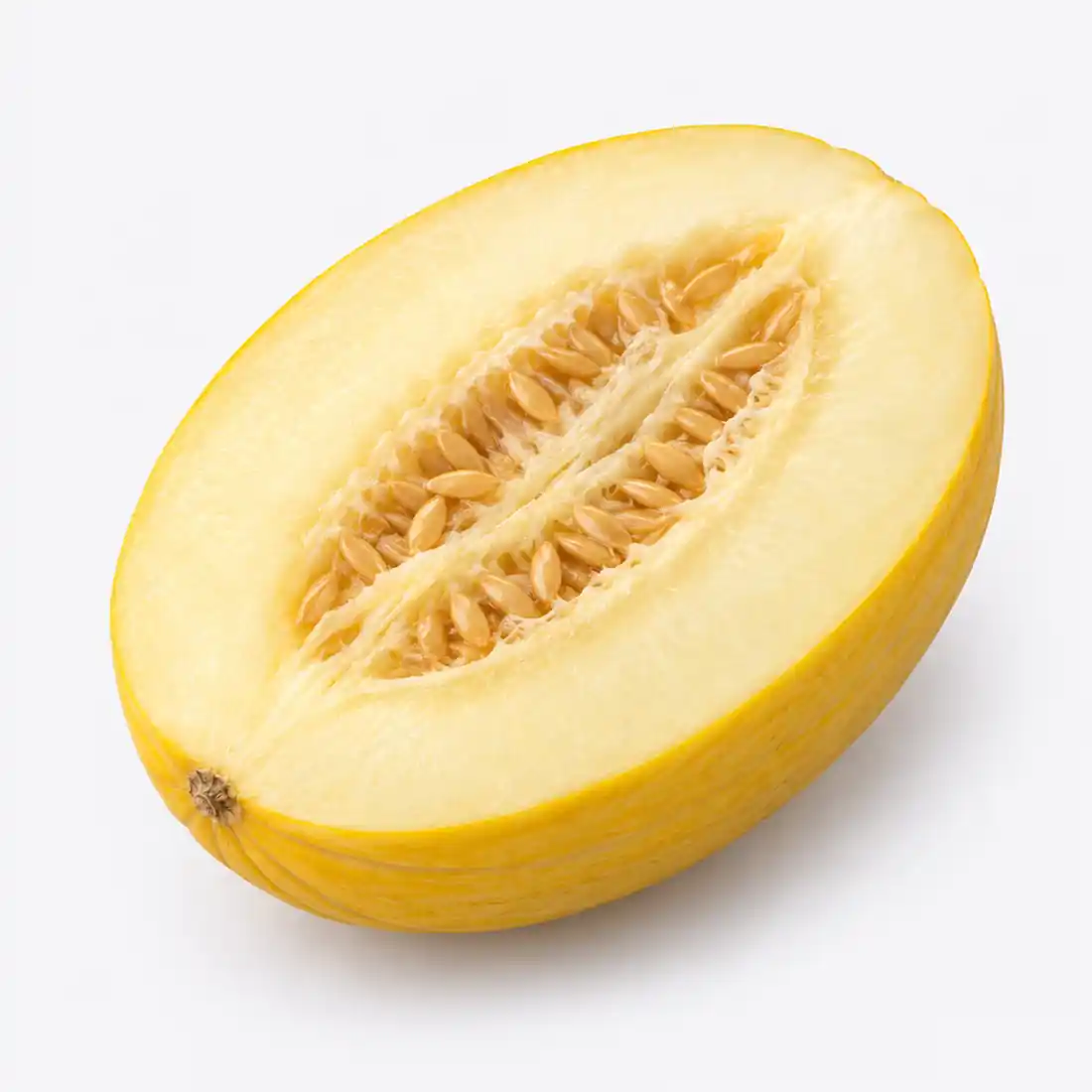
Mash ripe, soft, rindless, seedless melon into a puree and offer it from a spoon.
Offer a long, thin slice of ripe, soft melon without rind or seeds that your baby can hold.
9+ months
Leave small, soft bits in the mash if your baby manages that texture.
Cut the flesh into narrow, soft strips.
12+ months
Offer finely chopped soft melon from a spoon; avoid melon balls and large, slippery cubes.
Offer soft, thin slices or small, flat pieces; avoid melon balls and large cubes.
Choking risk
Melon balls and large, slippery chunks can be choking hazards. Remove the rind and seeds. Mash the flesh or cut it into thin slices instead of firm cubes.
Keep your child sitting upright and stay with them throughout the meal.
Allergies
Individual allergic reactions are possible. People with a ragweed pollen allergy may cross-react to melon. This link doesn't mean your baby will have a reaction.
Orange or green flesh
100 g of orange-fleshed melon has 169 mcg of vitamin A, a third of the daily amount for babies 7 to 12 months old.
That's USDA data for cantaloupe; the 500 mcg target comes from the NIH. Pale green honeydew has almost no vitamin A, just 3 mcg. Vitamin C differs too: cantaloupe has 37 mg, almost three-quarters of the daily amount (50 mg), while honeydew has 18 mg. The NIH lists cantaloupe among good sources of vitamin C, along with strawberries and broccoli.
Why melon is linked to Listeria
The CDC says melons are more likely than many other fruits to be contaminated with Listeria. Two things are to blame: the flesh is low in acid, and melons are often kept in the fridge for a long time, and both conditions help Listeria grow. As an example, the CDC cites a multistate listeriosis outbreak in 2011 linked to cantaloupe.
The 2023 outbreak
In November 2023, the CDC investigated a Salmonella outbreak linked to cantaloupes: 407 people sick in 44 states, 158 hospitalizations and 6 deaths. The melons were recalled. The CDC notes that children under 5 are more likely to get seriously ill and need hospital care.
Water, potassium and sugar
According to the USDA, 100 g of cantaloupe has 90 g of water, 267 mg of potassium, almost a third of the daily amount for babies 7 to 12 months old (860 mg, according to the NIH), and 7.9 g of sugars, half as much as grapes. It's also low in calories, at 34 per 100 g.
How much is that
The NHS gives an example of an adult fruit portion: 1 slice of melon about 5 cm thick. A few soft strips or a couple of spoonfuls of puree is plenty for a baby.
Sources · 14
This page is based on guidance from health organizations:
- NHS — Feeding your baby from around 6 months
- FDA — Selecting and Serving Produce Safely
- NHS — Preparing food safely for babies
- CDC — Choking Hazards
- AAAAI — Food Allergy
- USDA FoodData Central — Melons, cantaloupe, raw
- USDA FoodData Central — Melons, honeydew, raw
- NIH ODS — Vitamin A and Carotenoids
- NIH ODS — Vitamin C
- CDC — How Listeria Spread: Sprouts and Melons
- CDC — Salmonella Outbreak Linked to Cantaloupes, November 2023
- USDA FoodData Central — Grapes, red or green, raw
- NIH ODS — Potassium
- NHS — 5 A Day portion sizes
For informational purposes only. Not medical advice. Decide on introducing foods, especially allergens, together with your pediatrician.