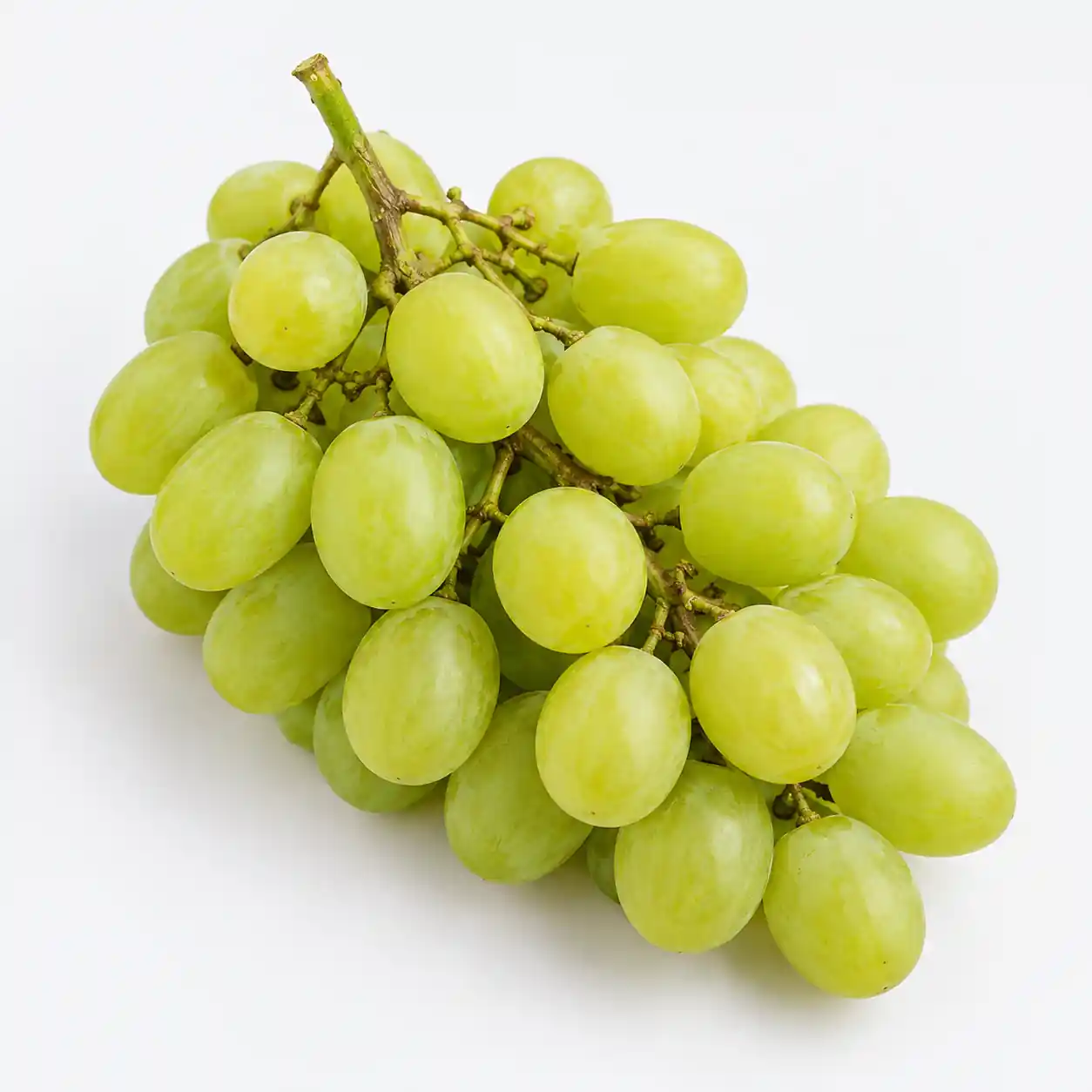
How to serve by age
6+ months
Mash seedless grape flesh to a soft, smooth texture and offer it from a spoon.
Put mashed, seedless grape flesh on a preloaded spoon your baby can hold.
9+ months
Finely chop grapes that have been cut lengthwise and had any seeds removed; mix the pieces into soft food if needed.
Cut grapes lengthwise into quarters, remove any seeds, and mash further if needed.
12+ months
Continue cutting grapes lengthwise into quarters and offer small pieces when your child can manage the texture.
Offer seedless lengthwise quarters; do not offer whole grapes.
Choking risk
Whole grapes can block a young child's airway. Cut every grape lengthwise into quarters, chop smaller if needed, and remove any seeds. Keep cutting grapes even after the first birthday.
Keep your child sitting upright and stay with them throughout the meal.
Allergies
Individual allergic reactions are possible.
A sweet fruit
100 g of grapes has 15.5 g of sugars, more than banana, mango, or apple.
That’s USDA data: banana has 12.2 g of sugars, mango has 13.7 g, and apple has 10.4 g. Grapes are low in fiber, at 0.9 g per 100 g, a third of what banana has.
Vitamin K and potassium
100 g of grapes has 14.6 mcg of vitamin K, several times the daily amount for babies 7 to 12 months old, and 191 mg of potassium, about a fifth of the daily amount (860 mg, according to the NIH). Vitamin K helps blood clot and keeps bones healthy, and potassium helps muscles, nerves, kidneys, and the heart work. Grapes are low in vitamin C, at 3.2 mg per 100 g.
100 g of grapes also has 0.09 mg of vitamin B6, almost a third of the daily amount (0.3 mg, according to the NIH).
Raisins
Raisins are dried grapes, and drying changes them a lot. According to USDA data, 100 g of dark raisins has 65 g of sugars, 4.5 g of fiber, and 1.8 mg of iron. The CDC lists dried fruit, such as raisins, among choking hazards for young children.
Raisins are high in potassium too: 744 mg per 100 g, nearly the daily amount for babies 7 to 12 months old (860 mg, according to the NIH). Dried grapes are much higher in calories than fresh: 299 per 100 g versus 69.
Sources · 12
This page is based on guidance from health organizations:
- CDC — When, What, and How to Introduce Solid Foods
- NHS — Preparing food safely for babies
- CDC — Choking Hazards
- NHS — Food allergies in babies and young children
- USDA FoodData Central — Grapes, red or green, raw
- USDA FoodData Central — Bananas, raw
- USDA FoodData Central — Mangos, raw
- USDA FoodData Central — Apples, raw, with skin
- USDA FoodData Central — Raisins, dark, seedless
- NIH ODS — Vitamin K
- NIH ODS — Potassium
- NIH ODS — Vitamin B6
For informational purposes only. Not medical advice. Decide on introducing foods, especially allergens, together with your pediatrician.